
 By
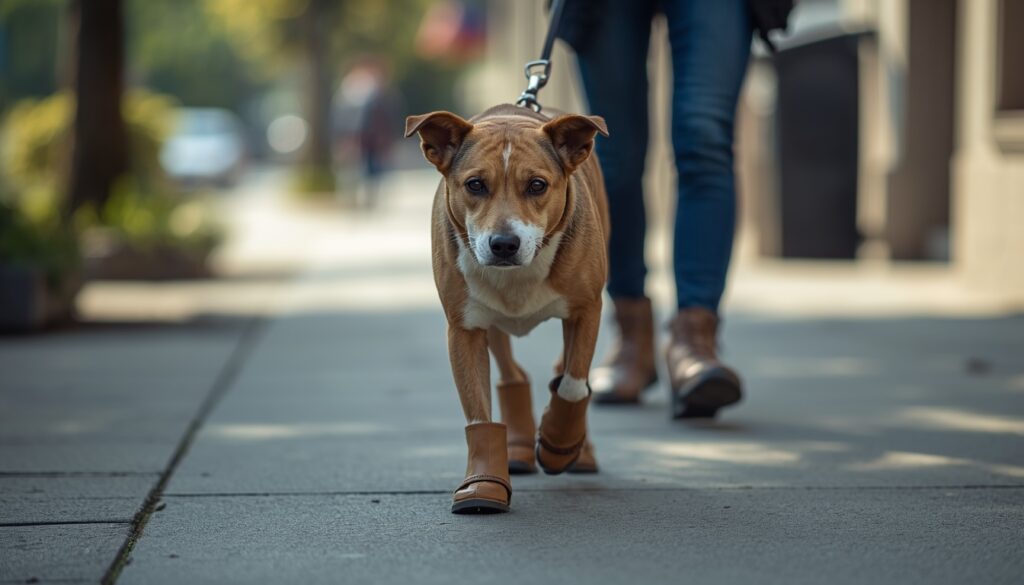
Hot pavement hurts before it feels hot to you
In a Texas summer, a short walk on a sunny sidewalk can injure your dog’s paws. Veterinary sources are clear about why. AAHA says surfaces such as asphalt, concrete, sand and artificial turf can run 40 to 60 degrees hotter than the air, and that on an 86-degree day asphalt can reach about 135 degrees. PetMD gives the same figure and adds that hot asphalt can burn, crack and blister paw pads. Water softens the pads, so the risk is higher after a swim or a bath.
Boots are one tool for this. They are not the only one, and they are not the first one. This guide explains how to test the ground, what makes a boot worth considering, five products to look at, and the signs that mean a vet visit.
Who this is for, and who should see a vet instead
Boots suit dogs that have to walk on pavement, sand or other hot surfaces in direct sun: city dogs, dogs on a commute or errand, and dogs on sunny trails. A dog that mostly lives in a shaded yard may not need them. Hill’s Pet says breed, size and age do not decide this. It is a personal choice based on where your dog walks.
Skip the shopping and call your vet if your dog has already had a walk on hot ground and now:
- Limps, or will not put weight on a paw
- Licks or chews the feet more than usual
- Has pads that look darker or redder than normal, small raised spots, or blisters
- Has a piece of pad missing, or a cracked, bleeding pad
AAHA’s first aid steps are to move the dog to shade or air conditioning, rinse the paws with cool (not icy) water, and call your vet. PetMD warns that injured pads can get infected quickly. If a dog is also panting hard, drooling or wobbly, think heat stroke and call a vet or emergency hospital at once. See our dog limping guide for other reasons a dog may limp, and the 24-hour emergency vets in Houston on HeiBob.
How we chose
We have not tested these products hands-on. We picked each one because it exists, is sold in the US, and has a maker or retailer page that says what it is for and how it is sized. We then compared those pages with what veterinary sources say a paw-protection product should do: be light and breathable, have a non-slip sole, be easy to put on, fit snugly, and be introduced gradually. Fit varies by paw shape, so the best choice for your dog may not be on this list.
First, the seven-second test
Before any walk, press the back of your hand flat on the pavement for seven seconds. AAHA recommends this test. PetMD describes the same idea with the palm or the sole of a foot. If it is too hot for you, it is too hot for your dog, whether or not your dog is wearing boots. In that case choose a different time or place:
- Walk early in the morning or late in the evening, when the ground is cooler
- Stay on grass or dirt paths where you can
- Swap a midday walk for indoor play
What to look for in a boot
- Light and breathable. PetMD and Hill’s Pet both advise boots that are lightweight and breathable.
- Non-slip sole. A grippy sole helps on smooth pavement and wet ground.
- Easy on and off. A wide opening, a gusset or a strap makes daily use realistic.
- Adjustable, snug fit. Look for a closure that tightens around the narrowest part of the leg. Loose boots rub and slip.
- Sold in useful sizes. Front and rear paws can differ, so a set that lets you pick two sizes helps.
- Easy to clean. You will be washing them.
Our picks in more detail
Ruffwear Grip Trex Dog Boots: best for hot pavement and trails
Ruffwear describes a breathable polyester mesh upper, a Vibram non-marking rubber sole with a lug pattern, and a hook-and-loop cinch that holds when wet. A gusset helps with getting them on and off, and the trim is reflective. The maker sells them as a set of two so you can order different sizes for front and rear paws.
Worth knowing: Ruffwear says to measure the widest part of every paw with the dog standing, to size down if you are between sizes, and to check the fit about 15 minutes into an activity. Sizes run from 1.50 to 3.25 inches.
Ruffwear Summit Trex Dog Boots: best for all-season wear
The Summit Trex has a non-marking rubber outsole, a weather-resistant ripstop polyester upper and a cuff of rubber material. It opens wide for easy on and off. Ruffwear lists hot pavement, rough surfaces, ice, rain, snow and snowmelt chemicals among its intended uses, so it suits a dog that needs paw protection all year.
Worth knowing: it is also sold in sets of two, and the same measuring advice applies. A weatherproof upper can be warmer than a mesh one, so watch your dog on hot days.
Kurgo Blaze Cross Dog Shoes: best for evening walks
Kurgo’s page describes a structured synthetic upper and sole with a mesh design for ventilation, ankle cord locks for adjusting the fit, and reflective trim. Small lights show direction, green on the right shoe and red on the left, which is handy on evening walks when the ground has cooled. The maker lists hot pavement, snow, ice and rough terrain as uses and says sizing runs from XX-Small to X-Large by paw width.
Worth knowing: the maker says the light battery is sealed and not replaceable. The page we read does not say how many shoes come in a pack, so check the listing before you buy.
PawZ Rubber Dog Boots: best low-cost, short-use option
PawZ boots are rubber boots that stretch over the paw with no straps or ties. A retailer page describes them as protecting paws and floors from dirt, urine, allergens and hot pavement and sand, and says they go on before a walk and come off before the dog comes inside.
Worth knowing: the retailer listing we read calls them both disposable and reusable and does not give sizing, so check the maker’s size chart and pack count. A stretch boot has no strap to adjust, so check that it stays on, use the seven-second test every time, and keep walks short.
Musher’s Secret Paw Wax: best if your dog refuses boots
This is a food-grade wax and oil blend you rub into the pads. Its Chewy listing describes it as a breathable barrier for paws and says it is non-toxic if licked. AAHA and PetMD both mention wax as an option for dogs that will not wear boots.
Worth knowing: a veterinarian quoted by PetMD says wax may not protect against thermal burns on the hottest days. Use it for dry or rough pads and mild conditions, and rely on route and timing for real heat.
Which product for which situation?
| Your situation | What to consider |
|---|---|
| Daily sunny sidewalk walks | A boot with a sole and a snug closure, plus early or late timing |
| Hikes or mixed terrain | A trail boot with a lugged sole |
| Evening walks | A boot with reflective trim or lights |
| Short trips, dog tolerates thin boots | A thin rubber boot, with the hand test every time |
| Dog refuses boots | Wax for tough pads, and grass routes or indoor play for hot days |
| Pavement fails the seven-second test | Change the time or route. Do not rely on any product |
How to use boots safely
- Introduce them indoors. Hill’s Pet suggests short sessions at home with rewards, and AAHA advises the same.
- Check the fit after a few minutes. Look for rubbing on the paw, the dewclaw and the wrist area.
- Watch your dog’s gait. Some dogs walk oddly at first. Constant chewing at the boots or refusing to walk means they are not working.
- Take them off after the walk. Check pads and between the toes, and dry the paws.
- Wash them. Ruffwear says to fasten the closures, wash cold on a gentle cycle and air dry.
- Keep checking the ground. Boots protect paws, not the rest of the dog. Heat stroke is still a risk on a hot day, so read our cooling mats guide and heat stroke guide.
Common mistakes
- Skipping the hand test because the dog wears boots. No boot maker promises that its product makes hot ground safe, and the dog can still overheat.
- Buying one size by body weight. Sizing is by paw width, measured while the dog stands.
- Forcing boots on a stressed dog. Hill’s Pet says never to do this. Try another style, or ask your vet for another way to protect the paws.
- Leaving them on too long. Remove them at the end of the walk, and check the paws.
- Waiting on a burned paw. Limping or blisters need your vet. A vet visit cost guide can help you plan.
Other ways to protect paws in heat
Most paw burns can be avoided without any product. Walk when the ground is cool, carry water, keep to shade and grass, and keep puppies and seniors on short outings. Our dog first aid kits guide covers what to have on hand for minor paw injuries, and your vet can show you how to check pads at home.