
 By
What a first aid kit is for
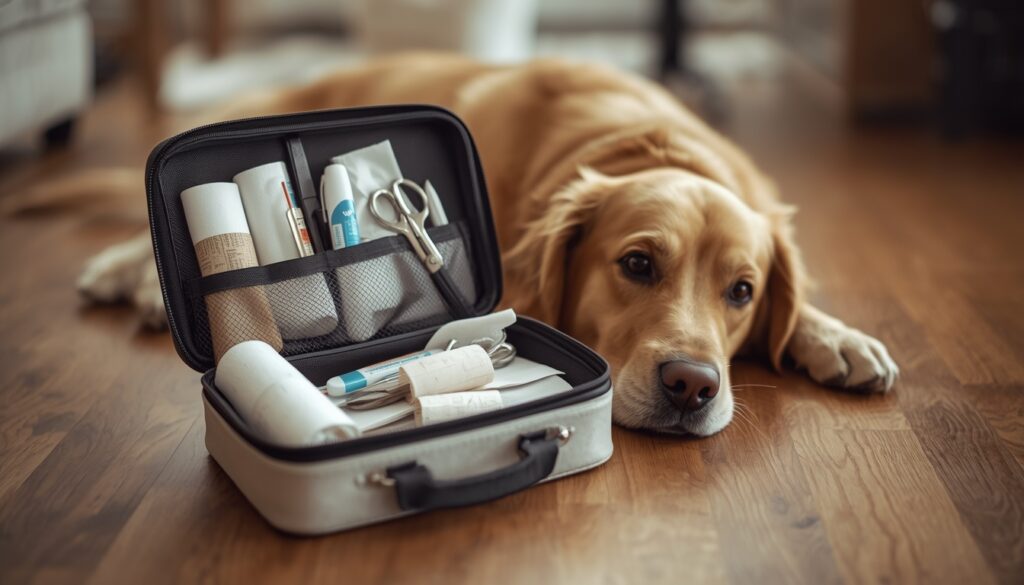
A dog first aid kit is for the minutes between something going wrong and getting your dog to a vet. It helps you stop bleeding, cover a wound, keep a hurt dog from biting, flush an eye and tell the vet useful facts such as your dog’s temperature. The American Veterinary Medical Association is clear that first aid is not a substitute for veterinary care: any first aid should be followed by a trip to the vet.
The kit matters most when you are stressed and short of time. Having everything in one bag, with the right phone numbers on top, means you spend those minutes helping your dog instead of searching drawers.
Who needs one, and when to skip first aid and go
Every dog household benefits from a basic kit, and dogs that hike, camp, swim, travel or work outdoors benefit from a second, smaller one that goes with them.
Some situations need no first aid beyond getting in the car. Call ahead and go straight to your vet or a 24-hour emergency vet if your dog:
- Has trouble breathing, or its gums look pale, blue or gray.
- Collapses, has a seizure, or can’t stand.
- Is bleeding heavily, or bleeding that does not slow with firm pressure.
- Has eaten something poisonous, such as chocolate, a medicine, xylitol or rat bait, even if it seems fine.
- Has a swollen, tight belly and is retching without bringing anything up.
- Has been hit by a car or fallen from a height.
Sudden collapse with pale gums can also be a sign of internal bleeding, for example from a bleeding tumor such as hemangiosarcoma. No kit treats that: go now.
For a suspected poisoning, call the ASPCA Animal Poison Control Center at (888) 426-4435 or the Pet Poison Helpline at (855) 764-7661 (both may charge a fee), or your vet, before you do anything else.
How we chose
We have not tested these products hands-on. We built the list from the first aid checklists published by the AVMA, Michigan State University’s veterinary college and California’s CARES animal emergency program, then chose ready-made kits and single items that cover those checklists well, are clearly labeled, and are sold in the US. We confirmed each branded product on the maker’s site or a major US retailer’s page. Brands matter less than having the right items, knowing where they are and knowing what not to do with them.
What to put in a dog first aid kit
This list draws on the AVMA, MSU and CARES checklists. A ready-made kit covers many of these; add the rest yourself.
Information
- Phone numbers: your vet, the nearest emergency hospital, and a pet poison line.
- A copy of your dog’s medical record and current medications, and a recent photo.
- A pet first aid guide or app.
Wound care
- Gauze pads and gauze rolls.
- Non-stick dressings or clean cloth strips to press on bleeding.
- Self-adhering wrap that does not stick to fur, plus adhesive tape.
- Sterile saline, for flushing wounds and eyes.
- A needle-free syringe or eye dropper, for flushing.
- Sterile lubricating jelly.
Tools
- Blunt-ended scissors and tweezers.
- A tick remover.
- Disposable gloves.
- A small flashlight.
- A digital fever thermometer.
Handling and transport
- A muzzle that fits, or a gauze roll that can be used as one.
- A spare leash and collar.
- Clean towels, and a blanket that can double as a stretcher for a large dog.
- A foil emergency blanket.
- A cold pack (wrapped in a cloth; never put ice or heat packs straight on skin).
Only on your vet’s or a poison line’s advice
- 3% hydrogen peroxide: some checklists include it, for making a dog vomit, but only when your vet or a poison control center tells you to. Never use it on wounds.
- Activated charcoal: only if your vet or a poison center instructs you to.
- Any human medicine, including antihistamines and pain relievers.
Our picks in more detail
Kurgo Dog First Aid Kit: best ready-made kit for home and car
Kurgo’s 50-piece kit packs gauze pads in two sizes, a gauze roll, a crepe bandage, tape, a trauma pad, antiseptic towelettes, tweezers, scissors, cotton swabs, sting relief pads, an instant cold pack, gloves, a foil blanket and a printed first aid guide into a washable bag. It is small enough to live in the car or by the door.
Worth knowing: like most ready-made kits, it does not include a muzzle, a fever thermometer or saline. Add those, and a card with your phone numbers.
Adventure Medical Kits Me & My Dog: best for hiking and camping
Built for the trail, this kit covers both a person and a dog: dressings and bandages, an irrigation syringe, trauma shears, a tick and splinter remover, a nylon leash, a triangular bandage that can be used as a makeshift muzzle, an emergency blanket, a cold pack and a pet first aid manual.
Worth knowing: the kit includes hydrogen peroxide and some human medicines. Do not give any of them to your dog unless a vet or a poison line has told you to. If that worries you, take them out and keep them in your own kit.
3M Vetrap Bandaging Tape: best self-adhering wrap
Vetrap is the stretchy, colorful wrap you often see on dogs leaving a vet clinic. It sticks to itself, not to fur, and tears by hand, so it holds a dressing in place without pins or tape.
Worth knowing: because it is elastic, it is easy to wrap too tight, which can cut off blood flow. Wrap it over padding, without stretching it hard, and check the toes for swelling or coldness. It contains natural rubber latex. A wrap you put on at home is to get your dog to the vet, not a substitute for a bandage a vet applies.
Baskerville Ultra Muzzle: best muzzle to keep in the kit
Hurt or frightened dogs may bite, even their owners. The AVMA advises muzzling a dog that might bite, but never a dog that is vomiting. A basket muzzle like the Baskerville Ultra lets a dog pant and drink, comes in six sizes and can be shaped with warm water for a better fit.
Worth knowing: fit it and practice with treats on a calm day, so it is not a new, scary thing in an emergency. If your dog has trouble breathing, do not muzzle it.
Digital fever thermometer: don’t skip
Your dog’s temperature helps your vet judge how urgent things are, for example after a hot day outdoors. MSU’s veterinary college advises a digital fever thermometer, used rectally, and gives a normal range of 101 to 102.5°F for dogs. Never put the thermometer in your dog’s mouth.
Sterile saline: don’t skip
Saline is for flushing grit, smoke or debris from an eye, or rinsing a dirty wound before covering it. The AVMA notes contact lens saline works for most purposes. Keep a fresh bottle and replace it once opened.
Ready-made kit or build your own?
| Option | Good for | Add or check |
|---|---|---|
| Compact ready-made dog kit | Car, front door, travel | Muzzle, fever thermometer, saline, phone card |
| Trail kit for you and your dog | Hiking and camping | Remove or label medicines; add a muzzle |
| Build your own in a waterproof box | Home, multi-dog households | Use the checklist above; date-check every few months |
How to use a first aid kit safely
- Keep yourself safe first. Approach slowly, keep your face away from your dog’s mouth, and don’t hug an injured dog. Use a muzzle if your dog might bite, unless it is vomiting or struggling to breathe.
- Call ahead. Phone your vet or the emergency hospital so they can prepare, or a poison line if your dog ate something toxic.
- Press on bleeding. Use a non-stick dressing or clean cloth and firm, steady pressure. If blood soaks through, add more on top rather than lifting the first layer.
- Cover, don’t dig. Don’t pull objects out of wounds. Cover the area and keep your dog still.
- Don’t give medicines or make your dog vomit unless your vet or a poison line tells you to. Bring the packaging of anything your dog swallowed.
- Move your dog carefully. Small dogs can go in a carrier; larger dogs can be carried on a blanket or board used as a stretcher.
- Go to the vet. Even if your dog seems better, first aid is only the first step.
Keeping the kit ready
- Put the phone numbers on the very top, and save them in your phone.
- Check the kit every few months and after every use; replace anything used, opened or past its date.
- Tell everyone in the house where it is.
- Keep a smaller copy in the car and in your hiking pack.
- Keep a pet first aid guide with the kit; the CARES checklist suggests the AVMA’s basic procedures or the American Red Cross pet first aid app.
And know where your nearest emergency vet is before you need it. HeiBob lists 24-hour emergency vets in Houston, and our vet visit cost guide explains what an emergency visit usually involves.