
 By
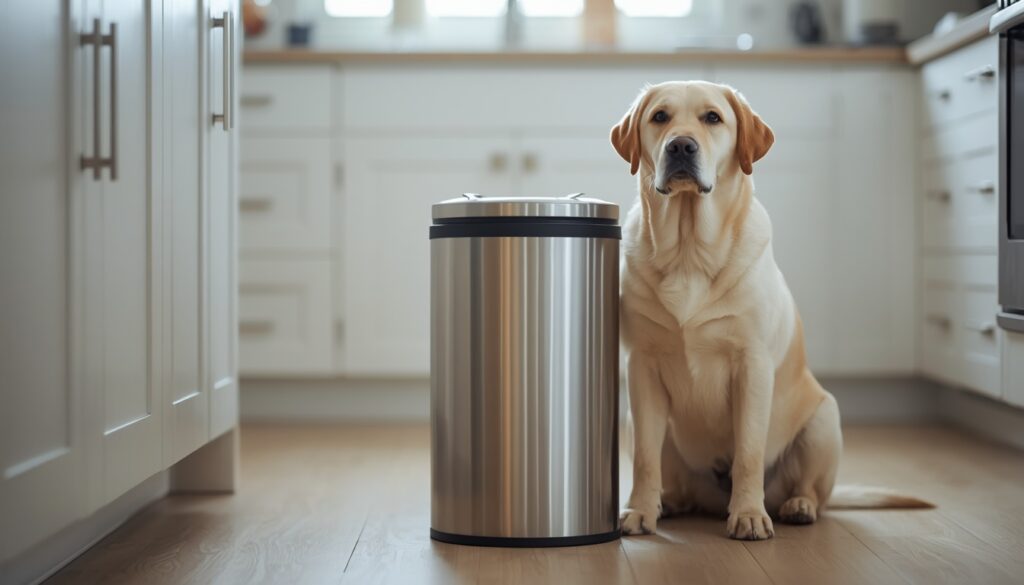
Why the trash and the pantry matter
Most dog poisonings at home are not exotic. They are everyday food and household items that were left where a dog could reach them. Pet Poison Helpline’s list of top pet poisons includes chocolate, grapes and raisins, onions and garlic, and xylitol, along with human pain relievers such as ibuprofen and acetaminophen. All of these can sit in a kitchen bin or on a low pantry shelf. A bin also holds bones, string, dental floss and packaging, which can cause blockages and internal injuries.
If your dog has already eaten something, skip this page and call your vet or a poison line now. Our guide to what to do when a dog eats chocolate walks through the first steps, and the glossary entry on theobromine explains why chocolate is toxic. This page is about the part you can do before it happens.
How we chose
HeiBob has not tested these products hands-on. We looked for products from established brands that are sold in the US, that describe a lock or latch aimed at keeping pets out, and that match the features veterinary writers suggest for trash and pantry safety: a secure, tight-fitting lid, a bin that is hard to tip, and storage behind a closed or locked door. We checked each product on the maker’s page or a major retailer’s page. No product is guaranteed to stop every dog, so treat these as one layer of protection and ask your vet if you have a dog with a history of eating things they should not.
Who needs this, and who should see a vet instead
A locking bin and cabinet locks suit dogs that raid the trash, counter-surf, or open low cupboards. They are especially useful for puppies, young dogs and breeds that are enthusiastic about food.
If your dog keeps eating non-food items such as socks, stones or fabric, or scavenges so persistently that no bin holds them, talk to your vet. Repeated eating of non-food items can be a medical or behavior problem that a better bin will not solve.
What to look for
- A lid that stays shut. A slide lock, latch or lock that a dog cannot nudge open is more useful than a plain push-top.
- A stable base. PetMD suggests weighting the bottom of a light bin so it cannot be knocked over. A heavier bin or one in a cabinet does the same job.
- Safe lid movement. PetMD also warns that lids that close automatically can trap a dog. If you use a sensor bin, supervise the first few uses.
- Odor control. Dogs follow their noses. Sealing food scraps in a bag before they go in the bin helps.
- A closed space. A bin in a cupboard or pantry, behind a door your dog cannot open, is the most reliable setup.
Our picks in more detail
simplehuman 13 gallon step can with secure slide lock: best everyday kitchen bin
This step can pairs a foot pedal with a slide lock that the retailer describes as keeping pets and curious children out of the trash. It is a sensible choice if you want a normal-looking kitchen bin with a physical lock rather than a sensor.
Worth knowing: a lock only works when it is engaged. Slide it shut each time, especially at night and when you leave the house.
iTouchless 13 gallon pet-proof sensor can: best touch-free option
iTouchless sells a 13 gallon sensor bin with a PetGuard lid lock, which it says is meant to keep even determined dogs out. The lid opens with a wave of your hand.
Worth knowing: sensor bins need batteries or power, and a lid that moves by itself is one to watch around a curious dog. Check the lock works as you expect before relying on it.
iTouchless 8 gallon pet-proof sensor can: best for small spaces
The smaller sibling suits apartments, small kitchens and bathrooms, where medicines and cleaning products often end up in the bin.
Worth knowing: a small bin fills quickly, so empty it often. Spoiled food is a risk by itself.
Safety 1st magnetic locking system: best cabinet lock
These locks mount inside the cabinet or drawer, so they are hidden from the outside, and a magnetic key releases them. Some packs include screws for materials such as particle board, where adhesive alone may not hold. They are made for child-proofing, but the same idea works for dogs that pull cupboard doors open.
Worth knowing: a strong dog may still pull hard on a door. Test the lock before you trust it, and keep the key out of reach.
OXO Good Grips POP containers: best for pantry food
POP containers have a push-button airtight seal. They are handy for storing dry food, treats and baking supplies, and sealing in smells makes them less tempting.
Worth knowing: a sealed container is not a lock. Chocolate, raisins and sugar-free products still belong on a high shelf or in a closed cupboard.
Which fix for which problem?
| Problem | What helps |
|---|---|
| Dog opens the kitchen bin | A locking lid, or the bin inside a closed cupboard |
| Dog tips the bin over | A heavier bin, a stable base, or a cupboard |
| Dog opens low cupboards | Hidden cabinet locks |
| Dog raids the pantry or counter | Food in closed containers on a high shelf or behind a door |
| Medicines in bags and on nightstands | Put them away behind a door; the SF SPCA advises storing medicines securely, including those in bags and on nightstands |
Safer habits that cost nothing
- Take out food waste often, or bag it and put it in an outdoor bin.
- Keep chocolate, sugar-free gum and mints, raisins, and medicines in a closed cupboard or on a high shelf, not on the counter or in a bag on the floor.
- Close the kitchen and bathroom doors when you leave.
- Give your dog a safe chew or a treat toy to meet their scavenging instincts, and a walk and a meal before you go out.
- Tell visitors and children to put bags and snacks out of reach.
If your dog gets into the trash anyway
- Stop the dog and look. Take away anything left. Check what is missing.
- Find out what and how much. Keep the wrapper, label or packaging so you can read the ingredients to your vet.
- Call. Phone your vet, an emergency hospital, the ASPCA Animal Poison Control Center at (888) 426-4435 or Pet Poison Helpline at (855) 764-7661. Both may charge a fee.
- Do not make your dog vomit unless a vet or poison line says to. Some substances do more harm coming back up.
- Do not wait for signs. Many poisons take hours to show.
Keeping a dog first aid kit at home helps with the rest. Find an emergency vet in Houston if you need one fast.