
 By
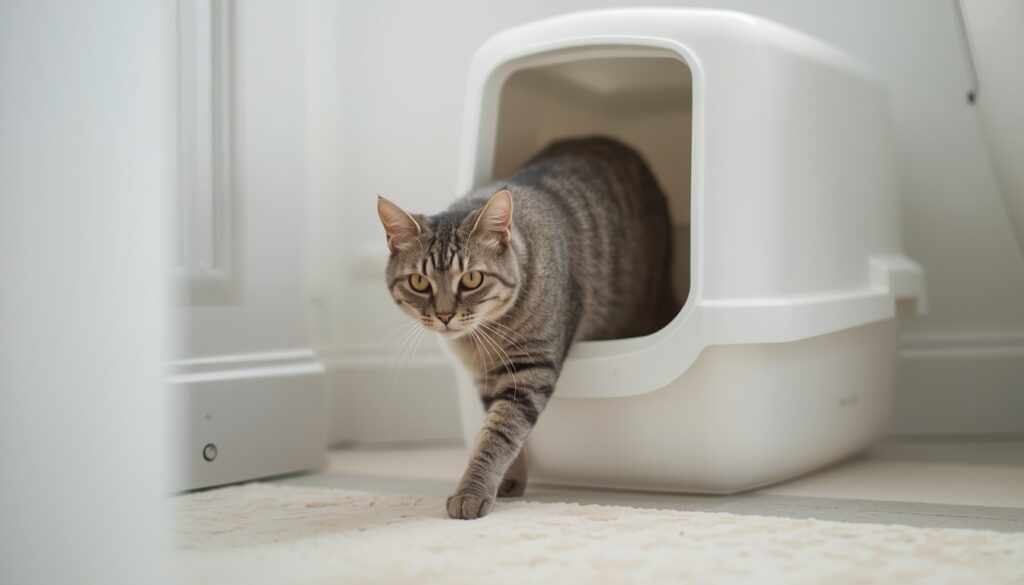
A litter setup helps you spot problems, it does not treat them
Cats with bladder trouble, including cats that have had a urinary blockage, are often asked to do more at home: more water, a calmer routine, and a litter box setup they like. A good setup will not cure anything. What it does is keep your cat willing to use the box and make changes in urine easy to see. If your cat is straining, crying, or going in and out of the box with little or no urine, skip this guide and call a vet now.
How we chose
We have not tested these products hands-on. For the setup advice we relied on the Merck Veterinary Manual, the University of Illinois Veterinary Teaching Hospital and a published study of environmental changes in cats with idiopathic cystitis. For the products we picked boxes and litters that fit that advice (roomy boxes, and soft, unscented, clumping litter), that are sold in the US, and that we confirmed on the maker’s or a major retailer’s page. Your cat’s own preferences matter more than any list, and your vet knows your cat’s history.
Who this is for, and who should see a vet first
This guide is for owners of cats that are prone to urinary problems, cats recovering after treatment (once your vet has said they are well enough to be home), and any owner who wants a better litter setup. See your vet instead of shopping if your cat:
- strains in the box with little or no urine (an emergency, especially in male cats)
- passes only tiny clumps, or blood in the urine
- goes to the box again and again, or cries while trying to pee
- suddenly starts peeing outside the box
Vet sources note that peeing outside the box can have medical causes, including cystitis, infections, arthritis, kidney disease and diabetes. A new litter is not the fix until those are ruled out. For urgent cases, see our list of 24-hour emergency vets in Houston.
What vets say to look for
- A big box. The Merck Veterinary Manual says bigger is better, because a cat needs room to dig and turn around. The University of Illinois suggests a box about one and a half times your cat’s length, nose to the base of the tail.
- One more box than cats. Add a box on each floor of a multi-level home, and spread boxes out rather than lining them up, since cats may treat a row of boxes as one.
- A quiet, easy-to-reach spot. Not in a basement or garage, and away from noisy appliances, food and water. A cat should be able to see who is coming.
- Low sides for older cats. An arthritic cat may avoid a tall entry. A box with one low side helps.
- Unscented, clumping litter. Most cats prefer soft, small-grained, clumping litter without perfume. Clumps also let you see at a glance how much your cat peed.
- Covered or open: your cat decides. Covered boxes contain mess, but some cats dislike them, and the University of Illinois says hoods can cause anxiety. Try an open box first, and offer both if you can.
- Daily scooping and regular washing. Scoop at least once a day. Every one to four weeks, empty and wash the box with hot water and mild soap.
Our picks in more detail
IRIS USA Large Cat Litter Box with Scatter Shield and Scoop: best open box for most homes
According to the maker, this open-top box measures 19 inches long, 15 inches wide and about 11.75 inches high, with tall walls that act as a scatter shield, and it comes with a scoop. Open tops make it easy to check the litter for clumps. At that size it suits average-sized cats; large breeds such as Maine Coons may want something bigger.
Worth knowing: the walls are high. For a kitten, a senior or a cat with sore joints, a lower tub (below) may be easier to climb into.
A large plastic storage tub: best budget or bigger-cat option
A wide, shallow storage tub often makes a bigger box than a store-bought litter pan. The University of Illinois guidance mentions storage containers and low-sided trays as good options, and says older cats can have one side cut down for easy entry. If you cut a tub, smooth and cover any sharp edge.
Worth knowing: choose a tub with plenty of floor space. Use a plain, unscented container, and wash it as you would any litter box.
Tidy Cats Free & Clean Unscented Clumping Litter: best everyday unscented clay
Purina describes this as a natural clay multi-cat clumping litter that is free from fragrances and dyes. It is widely sold, which makes it easy to restock without switching litter by accident.
Worth knowing: the maker lists activated charcoal for odor control. If your cat shows any sign of discomfort with a new litter, go back to the old one.
Dr. Elsey’s Ultra Unscented Clumping Litter: best low-dust clay
A hard-clumping bentonite clay litter that the retailer describes as controlling odor without perfumes or deodorants, with a medium grain and a dust-free claim. Firm clumps are handy for cats that need their output watched.
Worth knowing: a medium grain is a little coarser than some cats like. If your cat hesitates at the box, try a softer litter.
World’s Best Comfort Care Unscented: best non-clay option
This quick-clumping corn litter has no added perfumes and is light to carry. It is a good option if you want to avoid clay.
Worth knowing: the maker advises against mixing it with non-clumping litter, and cats used to clay may need a slow introduction.
A sturdy metal scoop: the supporting cast
Scooping every day is the most important habit on this page. A sturdy scoop with wide slots makes it quick enough to actually do. Clean clumps out entirely rather than breaking them up.
Which setup for which cat?
| Your cat | What to try |
|---|---|
| Average adult, one cat | Two large boxes in different quiet spots, with unscented clumping litter |
| Large or long cat | A wide storage tub, about one and a half times body length |
| Older or arthritic cat | A tub with one low side, on the floor where your cat spends most time |
| Cat that has had a urinary blockage | Use clumping litter, check the box several times a day, and follow your vet’s plan for diet, water and rechecks |
| Cat peeing outside the box | Vet visit first, then change boxes, litter and stress sources one at a time |
How to switch litter or boxes safely
- Change one thing at a time, so you know what your cat likes.
- Add the new litter to the old in small amounts over a week or two, or put a new box beside the old one first.
- Keep the depth and the box location steady while you change the litter.
- Do not move the box to a spot your cat avoids, or next to food and water.
- Watch the clumps for the first few days. Go back to the old litter if your cat avoids the box.
A published study of cats with idiopathic cystitis combined several changes, including an unscented clumping litter and an extra litter box, along with other changes at home. Because those changes were made together, the study cannot say which one made the difference. Treat the litter box as one part of a plan that also includes water, diet and low stress. Our guide to cat water fountains covers the water side.
Using the box to keep an eye on your cat
Clumping litter turns the box into a simple daily check. When you scoop, glance at how many urine clumps there are and how big. Many vets ask owners of cats with a urinary history to do exactly this, because a change is often the first sign of trouble. Things worth telling your vet about include clumps that suddenly get smaller or fewer, pink or red-tinged litter, a strong change in smell, or a cat that visits the box far more often than usual.
With more than one cat, it can be hard to know who is peeing where. If you worry about one cat, say so to your vet. They may suggest ways to tell, such as keeping that cat in a room with its own box for a short time. Do not start this without asking, since a stressed cat can make things worse.
Common mistakes
- Assuming the litter is the problem. Peeing outside the box is a reason to see a vet first.
- Switching litter often. The Merck Veterinary Manual advises sticking with a litter once your cat accepts it, since sudden changes can lead to soiling elsewhere.
- Too few boxes. One box for two cats is not enough.
- Scented litter and strong cleaners. Many cats dislike them. Wash with mild soap and rinse well.
- Waiting to see if straining passes. A cat straining with no urine needs a vet right away.