
 Written by
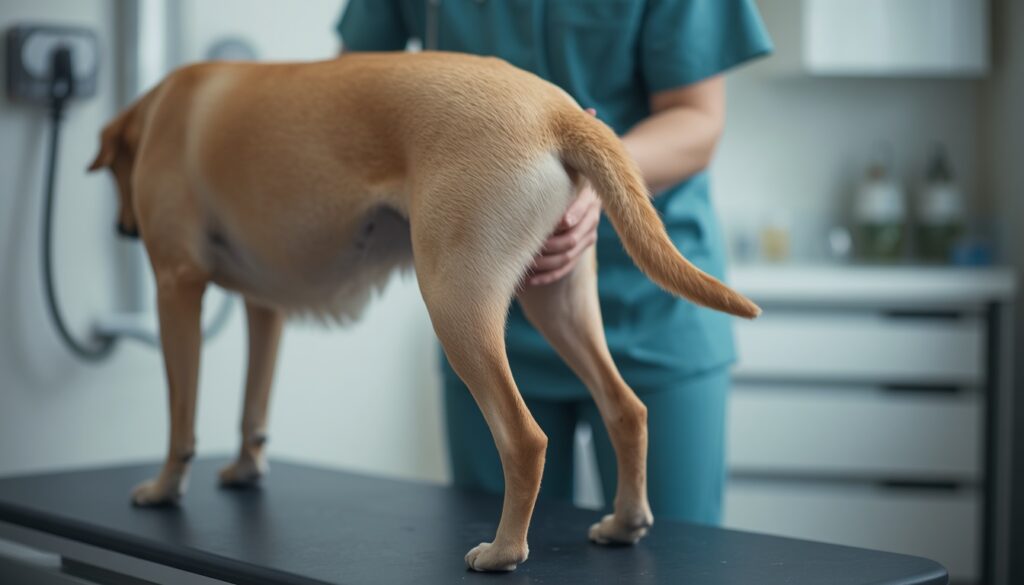
A closer look at cruciate ligament tears
Dogs do not have an ACL. The matching ligament in a dog’s knee is called the cranial cruciate ligament, shortened to CCL or CrCL. It does the same job as the human ACL, so most owners, and plenty of vets, simply say “torn ACL”. This guide uses both names for the same injury.
The ligament is a band of tough tissue deep inside the knee, which vets call the stifle. It runs from the thigh bone to the shin bone. The University of Florida’s veterinary hospital lists three jobs for it: it stops the shin bone sliding forward under the thigh bone, it stops the knee over-straightening, and it limits how far the shin can twist inward.
When the ligament tears, the knee becomes unstable. Every step lets the bones shift in a way they should not. That causes pain, swelling and lameness, and over time it leads to arthritis. The Merck Veterinary Manual calls cruciate ligament disease the leading cause of hind-leg lameness in dogs.
Why it happens: wear, not one bad jump
In people, an ACL usually snaps in a single sports injury. In dogs, that is the less common story. Merck says the disease can come from trauma or from slow breakdown of the ligament, and that the slow form is more common. The University of Florida goes further and says rupture in dogs is rarely the result of a traumatic injury.
What usually happens is this. The ligament weakens over months or years. Then an ordinary movement, such as running, jumping off the couch or turning fast in the yard, tears what is left. Owners often feel guilty about that last moment. In most dogs it was only the final step of a long process.
A true sudden rupture of a healthy ligament does happen. Merck says it is seen more often in younger dogs, after the ligament is overloaded.
Which dogs are most at risk
- Large breeds. Merck says the slow, degenerative form is more common in large-breed dogs and names Rottweilers, Labrador Retrievers and Newfoundlands as predisposed.
- Neutered dogs and female dogs. Merck lists both as groups in which the degenerative form is more common.
- Dogs with very straight back legs. Merck’s owner guide gives straight-legged dogs as an example of a build that makes the injury more likely.
- Dogs that have already torn one. The disease often affects both knees. See “The other knee” below.
Signs of a torn cruciate ligament
The signs depend on whether the tear is sudden, long-standing or partial. The University of Florida describes three patterns.
Sudden (acute) tear
- A painful back-leg limp that appears during or just after activity
- The dog puts little or no weight on the leg
- The limp often eases over the next several weeks, but the dog does not get back to normal
- The limp may suddenly get worse again if the meniscus tears
Long-standing (chronic) tear
- A limp that never quite goes away, with no clear moment when it started
- A knee that looks thick or swollen, from scar tissue building up around the joint
- A knee that does not bend as far as it used to
- Thigh muscles that shrink on that side because the leg is used less
- Less interest in exercise, which Texas A&M describes as coming and going over weeks to months
Partial tear
- A limp that shows up with exercise and improves with rest
- Difficulty bending the knee fully
- Signs that come back again and again, a little worse each time
A clicking or popping sound from the knee as the dog walks can mean the meniscus is torn.
None of these signs is specific. A limp on a back leg can also come from the hip, the kneecap, the spine, a broken bone or a bone tumor. Our guide to dog limping: emergency or wait sorts limps by how urgent they are.
How soon to see a vet
| How urgent | What you see | What to do |
|---|---|---|
| Now | No weight on the leg at all, a leg that hangs or looks misshapen, a limp after a fall or road accident, or severe pain | Call your vet or an emergency clinic and go in today. A fracture or a dislocated joint can look like a ligament tear. |
| Within a day or two | A clear back-leg limp, a swollen knee, a clicking knee, or a limp that keeps coming back after exercise | Book a visit. Keep your dog on a leash and stop running, jumping and stairs until then. |
| Watch for 24 hours | A mild limp in a bright, comfortable dog that still uses the leg | Rest your dog. Book a visit if the limp is still there the next day or returns. |
Do not give human painkillers while you wait. Several are harmful to dogs, and they can limit which medicines your vet can safely use afterwards. If you need out-of-hours help in Houston, see 24-hour emergency vets in Houston.
What happens at the vet
Knowing the steps makes the visit less stressful. Here is the usual order.
- History. Expect questions about when the limp started, whether it changes with rest and exercise, and whether there was a fall or accident.
- Orthopedic exam. The vet watches your dog move and then feels each joint. In a long-standing tear there is often a firm thickening on the inner side of the knee, which vets call a medial buttress.
- Tests for looseness. The key test is the cranial drawer. With the dog lying on its side, the vet holds the thigh bone still and checks whether the shin bone slides forward, like a drawer opening. A second test, the tibial thrust, checks for the same movement in another way. The University of Florida says the drawer test is not painful, but tense dogs may need a sedative so the muscles relax enough for it to be done properly.
- X-rays. The ligament itself does not show on an X-ray. Merck describes X-rays as essential all the same: they show fluid and arthritis in the joint and rule out other causes such as a fracture or a tumor. Surgeons also use them to measure the bone and plan the operation. Our dog X-ray cost guide explains what these usually involve.
- Bloodwork. If surgery is planned, expect routine blood tests before anesthesia.
- A plan. Your vet will talk through surgery and non-surgical care, and may refer you to a surgeon.
Two things can make the diagnosis less clear. Merck notes that the classic signs may be missing when the tear is only partial. The University of Florida adds that a knee with a lot of scar tissue and arthritis may not show a drawer movement at all. In those cases the history, the swelling and the X-rays carry more weight.
Treatment options compared
The torn ligament cannot be stitched back together. Treatment aims to make the knee stable enough to use without pain. The table sums up the main choices as described by the sources at the end of this page.
| Option | How it works | Who it tends to suit | Worth knowing |
|---|---|---|---|
| TPLO (tibial plateau leveling osteotomy) | The surgeon makes a curved cut in the top of the shin bone, rotates it so the joint surface is more level, and fixes it with a plate and screws. The knee then stays stable without the ligament. | Dogs of any size. The University of Florida says it does especially well in large dogs. | Merck reports that at 6 and 12 months after TPLO, dogs walk and trot much like healthy dogs. Needs special training and equipment, so it is usually done at referral or teaching hospitals. The cut bone has to heal. |
| TTA (tibial tuberosity advancement) | A cut is made at the front of the shin bone where the kneecap tendon attaches. That piece is moved forward and fixed with a plate and screws. | Offered by some surgeons as an alternative to TPLO. | Merck says normal walking is reached only by 12 months, and that TPLO patients appear to have less pain and fewer mobility problems than TTA patients. |
| Lateral suture (extracapsular repair) | A heavy suture is placed outside the joint, running in a similar direction to the ligament. It steadies the knee while scar tissue forms around it. | Smaller dogs. The University of Florida reports very good results in dogs under 30 to 40 pounds. | No bone is cut. In larger dogs results are less predictable and the suture is more likely to break. |
| Non-surgical care | Weight loss, pain relief, controlled exercise and rehab. Texas A&M also lists joint supplements and joint injections. | Some small dogs, dogs with very mild signs or early injury, and dogs that cannot safely have an anesthetic. | Texas A&M says many dogs can be kept comfortable for a time, but arthritis, pain and lameness worsen in the end. |
Merck calls the bone-cutting operations (TPLO, TTA and similar) the gold standard and says newer evidence suggests TPLO is the most effective. It also notes that one comparison found no substantial difference in lameness between lateral suture and TPLO at 2 to 6 months after surgery. So the right choice depends on your dog’s size, age and activity, and on what your surgeon does most often.
Any pain medicine must come from your vet, at the amount your vet sets for your dog.
The meniscus: the injury inside the injury
The menisci are two pads of cartilage that cushion the bones inside the knee. Merck says that between 20% and 77% of dogs with a ruptured cruciate ligament, or even more, have damage to the meniscus as well. The inner (medial) meniscus is the one usually affected. The University of Florida explains that it can tear at the moment the ligament goes, but is more often damaged later, after the knee has been unstable for a while. That is one reason vets advise against waiting months to see whether a limp sorts itself out.
During any of the operations the surgeon checks the meniscus, and the torn part is removed. Texas A&M says this takes away the pain it causes and improves how the dog uses the leg. A meniscus can also tear after surgery. Merck puts this at roughly 2% to 30% of cases, depending on the technique used. A dog that was recovering well and then suddenly goes lame again, sometimes with a click, should be checked for it.
Surgery day and the first two weeks
Each hospital has its own routine, and yours will give you written instructions. As an example of what to expect, this is how the University of Missouri describes a TPLO:
- Before. No food after 10 p.m. the night before; water is fine. The hospital tells you which medicines to stop and when.
- The operation. The surgery itself takes about one and a half hours. Your dog is under anesthesia for longer, because X-rays are taken straight afterwards to check the plate.
- The first night. Dogs recover in intensive care with pain relief and fluids. Most go home the day after surgery.
- What you will see at home. A shaved leg, with bruising and swelling that the hospital describes as normal. The University of Illinois says to expect marked swelling for about the first week.
- The incision. Skin stitches or staples come out about two weeks after surgery. Licking is a common cause of infection, so your dog will need a cone or a cone alternative until then.
Recovery: what the months look like
The operation is the short part. The outcome depends heavily on what happens at home afterwards, because cut bone and soft tissue need time to heal.
| When | What to expect |
|---|---|
| First 2 weeks | Strict rest. Short leash walks for toilet breaks only. Missouri advises a sling under the belly on slippery floors for two weeks. Stitches out at about two weeks. |
| Weeks 2 to 8 | Still no running, jumping, playing or stairs. Missouri asks for crate or small-room confinement for the first eight weeks. Leash walks slowly get longer, and rehab exercises begin as your surgeon directs. |
| Recheck X-rays | At about 8 weeks at Missouri; at 4 to 6 weeks and again at 3 months at Florida. The X-rays show whether the bone has healed after a TPLO or TTA. |
| 3 to 4 months | Florida says most dogs return to normal activity at this stage, once the bone has healed and the muscles have been rebuilt. |
| Up to a year | Strength and gait keep improving. Missouri expects full function by a year if there are no serious complications. |
Rehab is not an extra. Merck’s owner guide calls physical therapy after surgery critical for recovery. Ask what your hospital includes and what you can do at home. For the strict-rest weeks, see our guide to recovery aids for dogs after ACL surgery.
Complications
The figures vary by source. Merck gives a complication rate of 15% to 28% for surgical stabilization overall. The University of Missouri says that for its TPLOs the risk of any complication is under 10%, and of a major one under 5%. The problems named most often are infection, bleeding, implants that loosen or break, and a later meniscus tear. Too much activity too soon is a common thread, and the University of Florida warns that ignoring the exercise limits can lead to complications that need a second operation.
Call your surgeon if the leg is suddenly used less, if the incision opens or leaks, or if your dog seems unwell.
Outlook
For most dogs the outlook after surgery is good. Merck says good to excellent leg function is reached in more than 80% of cases, and the University of Florida puts success at about 90% when aftercare is followed.
Two points are worth being realistic about:
- Arthritis. Merck describes arthritis in the knee as progressing whatever treatment is chosen. Surgery slows the damage by ending the instability. It does not turn the joint back into a normal one. The outlook is best when the knee is stabilized before arthritis is far advanced.
- Without surgery. The University of Missouri states that dogs managed without surgery never recover fully and always keep some lameness. That may still be the right choice for a small, older or medically fragile dog. It is a choice to make with your vet.
The other knee
Because the disease is usually a slow weakening and not a one-off accident, it often affects both knees. The University of Florida says about 30% to 50% of dogs rupture both ligaments within 1 to 2 years of each other. The University of Illinois gives a similar figure: about half within two years. Watch the other back leg for the same early signs, and allow for a possible second operation in your budget.
Can it be prevented?
Not reliably. The University of Illinois says there is no definitive way to prevent a cruciate tear. What vets do recommend is keeping your dog at an ideal body weight and giving regular, moderate exercise, both of which reduce the stress on the knees. Neither is a guarantee, but both also help a dog cope with arthritis later.
What treatment costs
Cruciate surgery is one of the bigger bills a dog owner is likely to face, and the total depends on the operation, your dog’s size and what the hospital includes. Because every figure needs a named source, we keep the numbers in one place: the dog ACL (TPLO) surgery cost guide, which covers national averages, published hospital prices and ways to plan for a second knee. For the first visit, see how much a vet visit costs. To find a clinic, browse vets in Houston or vets in Austin, and ask your regular vet which surgeons they refer to.
Questions to ask your vet or surgeon
- Is the tear partial or complete, and do you suspect a meniscus injury?
- Which operation do you recommend for my dog’s size and age, and why?
- Is non-surgical care a reasonable option for my dog? What result should I expect from it?
- What does the estimate include: X-rays, anesthesia, implants, the hospital stay, medicines, rechecks and rehab?
- What exactly is allowed in weeks 1 to 2, 3 to 8, and after the recheck X-rays?
- How does the other knee look, and what can we do to protect it?