
 By
Why dogs wear cones, and why alternatives exist
After surgery, or while a wound or a patch of irritated skin heals, a dog’s instinct is to lick and chew it. That can pull out stitches, open the incision and carry bacteria into it. The American College of Veterinary Surgeons notes that licking and chewing can disrupt healing and raise the risk of infection, and that your veterinary team will suggest protection based on where the wound is and on your dog.
The classic answer is the plastic Elizabethan collar, or e-collar: the “cone”. It works, but many dogs hate it. They bump into doorframes, struggle to reach their bowls, sleep badly and seem bothered by the way the cone changes sound and vision. That is why a range of alternatives has grown up: inflatable collars, soft fabric cones, neck braces, body suits and leg sleeves. Each one protects some parts of the body well and leaves others exposed.
This guide covers dogs recovering from surgery, such as a spay, a lump removal or a splenectomy for hemangiosarcoma, and dogs that lick or scratch skin raw, as many dogs with atopic dermatitis do.
Who needs one, and who should call the vet instead
A cone alternative is a good idea when your vet has told you to stop your dog reaching a wound and the standard cone is causing real problems: your dog won’t eat or drink in it, is panicking, or keeps injuring itself bumping into things.
Call your vet instead of shopping if:
- The incision is red, swollen, hot, smelly or leaking thick fluid or pus.
- The wound edges have opened, or stitches or staples are missing.
- Blood or fluid keeps seeping from the wound.
- Your dog has already licked or chewed the wound and you cannot stop it.
- Your dog is unusually quiet, off food, vomiting or in pain after surgery.
- The skin problem is new, spreading or keeps coming back. A cone protects the skin; it does not treat the itch.
How we chose
We have not tested these products hands-on. We shortlisted one well-known, widely sold product in each main type of cone alternative described by veterinary sources (VCA Animal Hospitals and a vet-reviewed PetMD guide), and confirmed each is sold in the US on the maker’s site or a major retailer’s page. We chose types first, because the type matters far more than the brand: the best collar is the one that actually stops your dog reaching its wound. Before you swap the cone your vet sent home, ask whether the alternative suits that wound.
What to look for
- It covers the wound’s location. This is the first and most important check. Neck-based collars protect the chest, sides, back and belly best. Paws, lower legs, the tail, the face and the ears are the hard places to protect.
- It fits your dog’s shape. Long-nosed, long-necked dogs can reach further round an inflatable ring than short-nosed dogs. Neck braces often don’t suit thick-necked breeds.
- Your dog can eat, drink and lie down. If your dog can’t reach its bowls, raise them or remove the collar while you watch it eat.
- It won’t be chewed off. Fabric suits and sleeves only work for dogs that leave fabric alone.
- It is washable. Recovery takes days to weeks, and things get dirty.
- Correct sizing. Use the maker’s chart and measure your dog. Most brands size by neck, chest or back length, not just by weight.
Our picks in more detail
KONG Cloud Collar: best inflatable collar
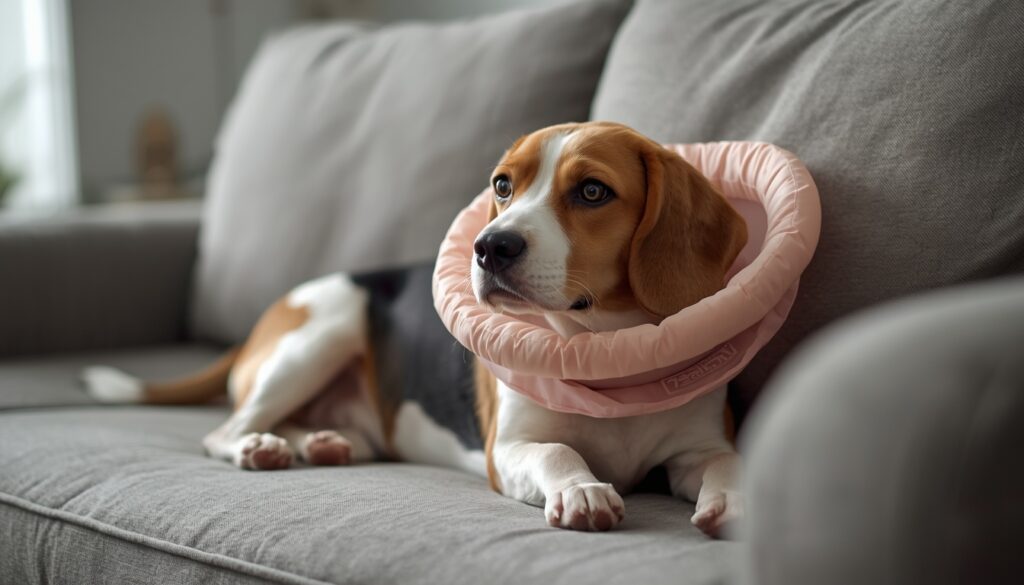
The KONG Cloud Collar is an inflatable ring with a fabric cover that fastens round the neck. KONG says it is made for dogs with injuries, rashes or recent surgery, does not get in the way of eating or drinking, and is machine washable. Because the head sits above a soft ring rather than inside a tunnel, dogs keep their side vision and usually settle quickly.
Worth knowing: veterinary guides note that inflatable collars often don’t stop a dog reaching wounds on the lower legs, paws or a hot spot low on the body, and that a poor fit lets some dogs turn round it. They don’t protect the face or ears at all. Test it while you watch: if your dog can touch the wound with its nose, it is the wrong tool for that wound.
All Four Paws Comfy Cone: best soft cone
The Comfy Cone is a cone made of padded nylon over foam, with removable stays for stiffness, hook-and-loop closure (so it goes on without pushing the head through), loops to thread your dog’s own collar through and reflective edging for night walks. It protects the same areas as a plastic cone, including the face, eyes and ears, which makes it the most useful alternative for dogs with eye or ear problems such as ear infections they keep scratching.
Worth knowing: fabric cones can fold too easily and are not see-through. Keep the stays in when your dog is alone; you can fold the cone back to help your dog eat, but only while you watch.
BiteNot Collar: best neck-brace style
Instead of a cone, the BiteNot is a tall, firm collar of flexible plastic and foam that stops the neck from bending round, held in place by a harness strap. It leaves side vision clear so dogs can eat, drink and sleep more normally. Sizing is by measuring from the base of the ear to the top of the shoulder blade, so measure carefully.
Worth knowing: the maker’s retailer page says it is not meant to protect the eyes or ears, and veterinary guides note this style often does not suit thick-necked breeds such as bulldogs. On small dogs it can protect the feet; on long-legged dogs, check.
Suitical Recovery Suit: best for chest, belly and back wounds
Recovery suits work the other way round: instead of keeping the mouth away, they cover the wound with stretchy, breathable fabric, like a snug onesie. They suit wounds on the trunk, such as a spay incision, a lump removal on the side or a belly incision after abdominal surgery. Many dogs find them far more comfortable than any collar.
Worth knowing: a suit only protects what it covers, so legs, paws, tail and face stay reachable. A determined dog can lick or chew through fabric, and suits generally need unfastening or removing at toilet time. The ACVS advises using surgical suits and sleeves only when your veterinary team suggests them, so ask first.
Suitical Recovery Sleeve: best for a front leg
The Recovery Sleeve is a stretch-fabric sleeve for one front leg, held on by a strap around the chest. It can cover a wound, a dressing or a patch of skin your dog keeps licking, and works on either the left or right side. It is a good match for dogs that lick a front leg or wrist area, a common habit in dogs with allergic skin.
Worth knowing: this model is for front legs; hind-leg sleeves are a separate product. Some owners report dogs chewing through the fabric, so watch your dog at first.
Clear plastic e-collar: the dependable backup
The plain plastic cone your vet hands out is still the option that protects the most areas, including paws and the face, and it is hard to chew through. Even if you choose an alternative, keep the original cone for nights, for times you can’t supervise, and for the moment you find your dog has worked out how to reach the wound.
Which alternative for which wound?
| Where the wound is | Options that usually suit | Usually not enough |
|---|---|---|
| Chest, belly, flank, back (spay, lump removal) | Recovery suit, inflatable collar, neck brace, soft cone | Leg sleeve |
| Front leg | Leg sleeve, soft or plastic cone | Inflatable collar for many dogs |
| Hind leg, paw or tail | Plastic or soft cone long enough to pass the nose; vet-fitted bandage | Inflatable collar, body suit |
| Face, eyes or ears | Plastic or soft cone | Inflatable collar, neck brace, suit |
| Itchy skin or hot spots while treatment starts | Depends on the spot: suit or sleeve for body and front legs, cone for paws and face | Anything that leaves the spot reachable |
How to use a cone alternative safely
- Ask your vet first. Tell them which product you are thinking of and where the wound is. They know how the wound was closed and what it can tolerate.
- Measure, don’t guess. Use the maker’s chart. For a collar, you should be able to slide about two fingers between it and your dog’s neck.
- Test it while you watch. Put it on, let your dog settle, then see whether it can reach the wound by twisting, stretching or lifting a leg to its mouth. If it can, it isn’t the right product.
- Don’t make suits or wraps too tight. Healing tissue needs blood flow, and tight fabric can rub. A suit should be snug, not compressive.
- Keep everything clean and dry. Wash suits and sleeves often, and have a spare if you can. Don’t put creams, sprays or disinfectants on an incision unless your vet tells you to; VCA warns never to clean an incision with hydrogen peroxide or alcohol.
- Help your dog eat and drink. Raise bowls if needed. If your dog won’t eat in its collar, take it off, stay with your dog while it eats, then put it back.
- Supervise outside. Keep your dog on a lead so collars don’t snag on shrubs, and unfasten a suit for toilet breaks if needed.
- Check the wound every day. A healing incision is clean and dry with edges that meet. A little bruising or mild redness early on can be normal; increasing redness, swelling, discharge, smell or an opening wound is not.
Helping your dog get used to it
- Put the new collar or suit on for a few minutes at a time with treats before you rely on it.
- Give your dog a few hours in a quiet room with fewer things to bump into.
- Move furniture out of tight spots and use a wider bed or crate if your dog needs room to turn.
- Offer a lick mat or food puzzle to keep your dog’s mouth busy (check with your vet about food after surgery).
- Keep activity calm and lead walks short while your dog heals, as your vet directs.
Common mistakes
- Taking the cone off “just for tonight”. One night of licking can undo days of healing.
- Choosing by comfort alone. A collar your dog loves but that doesn’t stop it reaching the wound protects nothing.
- Using an inflatable collar for a paw or face wound. These are the areas it covers least well.
- Leaving a chewer alone in a suit or sleeve. Pieces chewed off can be swallowed.
- Treating itch with a cone alone. If your dog keeps scratching, the cause needs a diagnosis. Our vet visit cost guide explains what a check-up involves, and you can find a vet in Houston on HeiBob.