
 Written by
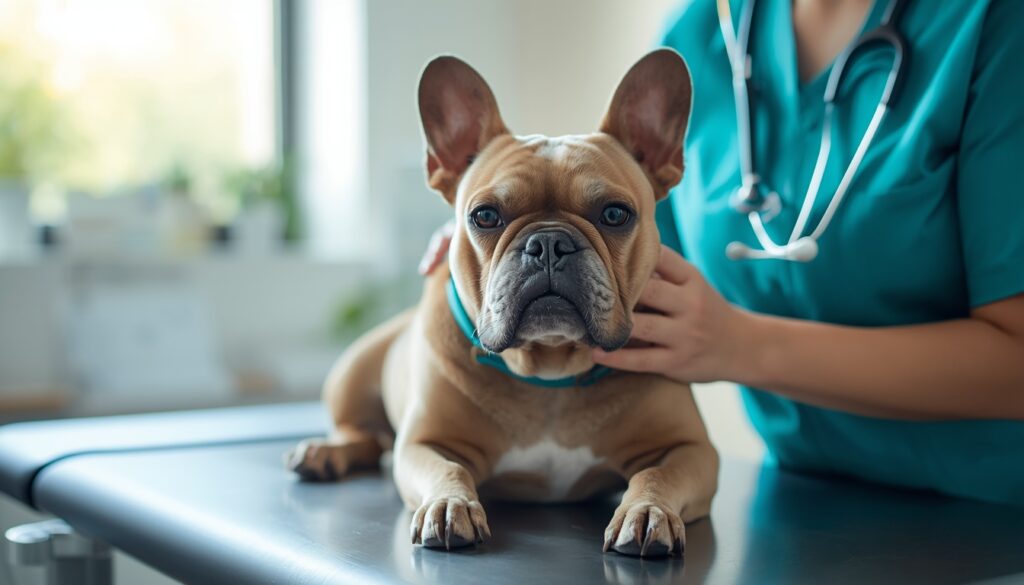
What brachycephalic airway syndrome is
“Brachycephalic” means short-headed. Bulldogs, French bulldogs, pugs and similar breeds have been bred for a short muzzle and a flat face. The bones of the skull are shorter, but the soft tissues inside the nose and throat are not, so they are crowded into less space. The result is an upper airway that is narrow in several places at once.
Vets call the breathing trouble this causes brachycephalic obstructive airway syndrome, or BOAS. You will also see it called brachycephalic airway syndrome or brachycephalic syndrome. They all mean the same thing. Our short glossary entry on BOAS gives the one-minute version. This guide covers the detail: the signs, how vets grade it, what surgery involves and how to live with a flat-faced dog safely.
It is a syndrome, not a single defect. A dog may have one of the problems below or several, and the more it has, the harder it is to breathe.
The airway problems behind it
- Narrow nostrils (stenotic nares). The nostrils are small slits instead of open holes, and they can fold inward when the dog breathes in.
- A soft palate that is too long. The soft palate is the flap at the back of the roof of the mouth. In these dogs it is long, and often thick, so its tip hangs into the opening of the airway.
- Everted laryngeal saccules. Small pouches of tissue just in front of the vocal cords get pulled into the airway by the suction of hard breathing, and partly block it.
- A narrow windpipe (hypoplastic trachea). The windpipe is too small for the size of the dog.
- Crowding higher up. Bony scrolls inside the nose (turbinates) can grow back into the throat, and some dogs have a large tongue or enlarged tonsils.
- Laryngeal collapse. After years of strain, the cartilage of the voice box weakens and folds inward. This is a late and serious stage.
Why it gets worse with time
A dog with a narrow airway has to pull harder to get air in. Cornell’s canine health center explains that this extra effort inflames and swells the tissues of the throat, which narrows the airway further. That is why a young dog that only snores can become an adult that struggles on walks, and why vets prefer to act early instead of waiting for trouble.
Breeds at risk
Cornell lists English bulldogs, French bulldogs, pugs and Boston terriers as the breeds seen most often. Boxers, Pekingese, shih tzus, Chinese shar-peis, Lhasa apsos and bullmastiffs are also affected. Schwarzman Animal Medical Center adds Cavalier King Charles spaniels and mastiffs to its list.
Not every flat-faced dog has BOAS. But the shape of the nose is a strong clue: the University of Cambridge BOAS research group reports that French bulldogs with moderately to severely narrowed nostrils are about 20 times more likely to develop the syndrome. Males and females are affected equally, according to Cornell.
Signs of BOAS
Many owners think of these signs as part of the breed’s character. They are signs of a partly blocked airway.
- Noisy breathing. Snoring, snorting and wheezing, awake or asleep. Some dogs are only noisy when excited, exercising, eating or stressed.
- Tiring quickly. Stopping on walks, lying down during play, or taking a long time to recover.
- Working to breathe. Flared nostrils, open-mouth breathing and visible effort from the chest and belly.
- Gagging and retching, especially when swallowing food or water. Regurgitation (food coming back up without effort) is common too.
- Poor sleep. Restless nights and pauses in breathing during sleep. The American College of Veterinary Surgeons notes that many affected dogs prefer to sleep on their backs.
- Struggling in warm weather. Dogs cool themselves by panting. A dog that cannot move air well cannot cool itself well.
- Blue gums or collapse. These mean the dog is not getting enough oxygen.
Two kinds of noise
The Cambridge group separates two sounds. Stertor is a low, snoring sound that comes from the throat, usually from a long, thick soft palate. Stridor is a high-pitched, wheezing sound that usually points to a narrowed or collapsing voice box. They note that it is common in pugs. If you hear the high-pitched sound, tell your vet.
Reverse sneezing, a burst of loud snorting in-breaths that lasts from a few seconds to about a minute, is also common in flat-faced dogs. Cambridge says it rarely needs treatment.
Emergency or wait? A quick guide
| What you see | What to do |
|---|---|
| Red: go now. Blue, purple or gray gums or tongue. Collapse or fainting. Labored breathing that does not ease within a few minutes of rest in a cool place. Heavy panting with thick drool or wobbling on a warm day. Breathing trouble after recent airway surgery. | Go to the nearest emergency vet. Keep your dog cool and calm on the way, with the car’s air conditioning on. Carry the dog if you can and do not put pressure on the neck. |
| Amber: see a vet within a day or two. Breathing that is noisier than it used to be. A new high-pitched wheeze. Tiring much sooner than before. Gagging or regurgitating often. Restless sleep with pauses in breathing. | Book a visit and keep exercise gentle and cool until then. Take a phone video of the noise and of your dog sleeping. |
| Green: raise it at the next routine visit. A young flat-faced dog that snores or snorts but exercises, eats and sleeps well. | Ask your vet to check the nostrils and to grade your dog’s breathing. Keep your dog lean. |
In a breathing crisis, Cornell says treatment at the hospital may include sedation, oxygen, anti-inflammatory medication and, if needed, a tube placed in the windpipe through the neck to bypass the blockage. If you are in Houston, our list of 24-hour emergency vets in Houston shows which hospitals are open now. Our guide on when to go to the emergency vet covers other warning signs.
How vets grade BOAS
A dog can look fine lying on the exam room floor and still be affected. To deal with that, the University of Cambridge and the UK’s Kennel Club developed the Respiratory Function Grading Scheme, which some US hospitals, including Schwarzman Animal Medical Center in New York, also use to describe severity. The vet listens to the dog’s breathing before and after a three-minute trot, then gives a grade.
| Grade | What it means | What usually follows |
|---|---|---|
| 0 | No signs of BOAS | A yearly recheck while the dog is young |
| 1 | Mild breathing noise, but the dog is not clinically affected | A yearly recheck while the dog is young; keep the dog lean |
| 2 | Moderate signs; the dog has BOAS | Management such as weight loss, surgery, or both |
| 3 | Severe signs; the dog has BOAS | A full airway examination and surgery |
Source: University of Cambridge BOAS Research Group, Recognition and Diagnosis page. The scheme was built for pugs, French bulldogs and bulldogs.
What happens at the vet
- History. Expect questions about snoring, sleep, exercise, heat, gagging and regurgitation. Videos from home help a lot.
- Physical exam. Narrow nostrils can be seen just by looking. The vet listens to the throat and chest and checks your dog’s weight and body condition.
- Exercise test. Some vets do the short trot test described above to grade the breathing.
- X-rays. Neck and chest X-rays show the width of the windpipe and the state of the lungs.
- Airway exam under anesthesia. The soft palate and the voice box cannot be judged properly in an awake dog, because the thick tongue hides them. A brief, light anesthetic lets the vet see how long the palate is, whether the saccules are everted and whether the voice box is collapsing.
- Advanced imaging, if needed. A CT scan or a camera passed into the nose and throat (endoscopy) shows the inside of the nose and helps plan surgery.
Anesthesia is harder on these dogs, so ask whether the airway exam and any surgery can be done under the same anesthetic, so your dog does not go under twice.
Treatment
Managing mild cases without surgery
Cornell and Schwarzman Animal Medical Center give the same core advice for dogs with mild signs:
- Keep your dog lean. Extra weight makes every sign worse. Ask your vet for a target weight and a feeding plan.
- Use a harness, not a neck collar. A collar presses on the voice box and windpipe.
- Avoid heat and humidity. Walk early or late, keep walks short in summer, and keep the house cool. A cooling mat gives your dog a cool place to rest, but it does not replace air conditioning.
- Control exercise and excitement. Short, calm outings are better than hard play. Stop when the breathing gets loud.
During a flare-up, vets may prescribe medication such as anti-inflammatories or sedatives. Give only what your vet has prescribed for your dog. These measures ease the load on the airway. They do not change its shape.
Surgery
The American College of Veterinary Surgeons advises treatment when the soft palate is causing distress, when signs are getting worse, or when the blockage is life-threatening. The operation is tailored to what the surgeon finds:
- Widening the nostrils. A small wedge of tissue is removed from each nostril so it stays open.
- Shortening the soft palate (staphylectomy). The excess length is trimmed with a scalpel, scissors or a laser so it no longer hangs into the airway.
- Removing everted saccules. These may be taken out at the same time, or left to see whether they settle once the airway is opened.
Two problems cannot be fixed this way. There is no operation for a narrow windpipe. And when the voice box has collapsed, trimming the palate and saccules may not give enough relief. For those dogs a permanent opening into the windpipe (a permanent tracheostomy) may be the only option, and it brings its own complications. Surgery on the turbinates inside the nose is not widely available and, according to Schwarzman Animal Medical Center, is still debated.
Risks
Anesthesia and recovery are the risky parts. Swelling or bleeding in the throat after surgery can block the airway, so dogs are watched closely as they wake up. Occasionally a temporary breathing tube is placed through the neck until the swelling goes down. Cornell states plainly that surgery carries a risk of complications, including death. A surgeon who does this operation often, in a hospital with staff on site overnight, is worth asking for.
Recovery and outlook
The American College of Veterinary Surgeons says dogs usually stay in hospital for at least 24 hours after airway surgery. Coughing and gagging are common in the first days. Your surgeon will give you feeding and exercise instructions for the recovery period. Keep your dog cool, calm and on a harness, and go straight back if the breathing becomes labored.
The outlook depends on age and on how far the disease has gone:
- Young dogs generally breathe much more easily after surgery and often become more active.
- Cornell reports better outcomes when surgery is done before two years of age.
- Older dogs may do less well, especially if the voice box has started to collapse. With advanced collapse the outlook is poor.
- Dogs with mild disease that is well managed can have a normal life expectancy.
Surgery does not make a flat-faced dog into a long-nosed one. Heat, weight and exercise still need care for life.
Living with a flat-faced dog
- Treat heat as a hazard. These dogs overheat faster than other dogs because panting does not work well through a narrow airway. Know the signs of heat stroke in dogs and what to do in the first minutes. In a Texas summer, that means indoor days and walks at dawn.
- Weigh your dog regularly. A small gain matters in a small dog.
- Tell every vet, groomer and boarding kennel. Stress and excitement can tip a dog into a breathing crisis. Any sedation or anesthetic, even for a dental cleaning, needs extra planning.
- Watch sleep and eating. New pauses in breathing at night, or more gagging and regurgitation, are reasons to go back to the vet.
- Keep videos. A short clip every few months makes it easier to spot change.
Other problems that come with BOAS
The airway is not the only part affected. Cornell lists stomach and esophagus problems such as hiatal hernia and acid reflux, which may improve once the airway is treated. Food or fluid that is regurgitated can be breathed into the lungs and cause aspiration pneumonia. Long-standing obstruction can lead to collapse of the voice box and of the smaller airways in the chest. And the Cambridge group warns that breathing pauses during sleep harm a dog’s quality of life and can be life-threatening.
Thinking of getting a flat-faced puppy?
BOAS is inherited, and it cannot be prevented in a puppy born with the defects. What a buyer can do is choose carefully. Ask the breeder whether both parents have had their breathing graded, and look at the parents yourself: open nostrils, a visible muzzle and quiet breathing at rest and after a walk are good signs. Cornell advises against breeding from dogs that have breathing difficulty, have needed airway surgery or have a narrow windpipe.
What it costs
We have not found a reliable published price range for BOAS surgery, so we do not quote one here. The bill depends on which procedures your dog needs, whether a specialist surgeon does them, the imaging beforehand and how long your dog stays in hospital. Ask for a written estimate that lists the airway exam, anesthesia, each procedure, overnight monitoring and the recheck. Our guide to what a vet visit costs explains how exam fees and estimates work, and you can find clinics near you in our Houston vet directory.
Questions to ask your vet
- What grade is my dog’s breathing, and has it changed since the last visit?
- Are the nostrils narrow enough to need widening?
- What is my dog’s target weight?
- Would you refer us to a surgeon, and how many of these operations do they do?
- Will the airway exam and the surgery be done under one anesthetic?
- Who watches my dog overnight after surgery?
- Is there any sign that the voice box is collapsing?
- Could the gagging or regurgitation be linked to the airway, and does it need its own treatment?