
 Written by
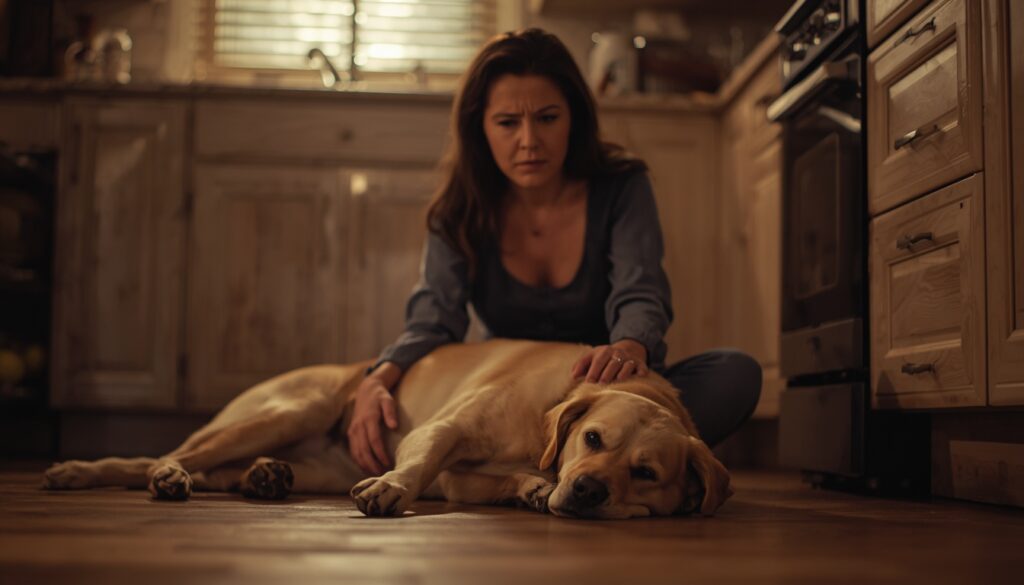
First, do these four things
- Look at the vomit before you clean it up. Note the color and roughly how much blood there is. Take a photo. It helps the vet more than a description.
- Check your dog. Lift the lip and look at the gums. Healthy gums are pink. Pale or white gums, weakness or a sore, tight belly mean go now.
- Call a vet. Phone your own vet or an emergency hospital and say what you saw. If your dog could have eaten rat poison or human medicine, also call ASPCA Animal Poison Control on (888) 426-4435 or Pet Poison Helpline on (855) 764-7661. Both are open around the clock and may charge a fee.
- Give nothing by mouth except a little water until you have spoken to a vet. No food, no human medicines, and do not try to make your dog vomit.
In Houston, the hospitals in our listings that are open all night are on the 24-hour emergency vets page.
Emergency or wait? A quick guide
Red: go to a vet now
- More than a streak or two of blood, or your dog has vomited blood more than once
- The vomit looks like coffee grounds
- Black, tarry stool or bloody diarrhea as well
- Pale or white gums, weakness, wobbling, fast breathing or collapse
- A painful, tight or swollen belly, or retching with nothing coming up, which can be a sign of bloat
- A puppy, or any dog that has not finished its vaccines
- Your dog may have eaten rat poison, human painkillers, or a toy, bone, sock or other object
- Your dog takes an anti-inflammatory painkiller or a steroid, or has kidney or liver disease
- Your dog cannot keep water down or keeps vomiting
- Bleeding anywhere else: nosebleeds, bruises on the skin or gums, blood in the urine
Amber: call a vet now and be seen today
- One small pink or red streak in the vomit, once, and your dog is bright, alert and has pink gums
- A fleck of blood after several rounds of vomiting, with no other signs from the red list
- You are not sure whether the red or brown color was blood
Amber is not “wait and see”. Cornell’s canine health center says blood or coffee-ground material in vomit is a reason to book a vet visit, and VCA Animal Hospitals lists blood in the vomit as a reason to seek care immediately. If anything from the red list appears while you wait, go in.
Green: watch at home
- A vet has examined your dog, or has heard the details by phone, and told you home care is enough
- You are certain the color came from something your dog ate, such as a red treat or food dye, and your dog is otherwise completely well
There is no green category you can choose on your own when it really is blood. The usual home advice for a single bout of vomiting, such as resting the stomach for a few hours, is meant for vomit without blood. If you are in doubt, call.
What the blood looks like, and what it tells the vet
| What you see | What it usually means |
|---|---|
| Bright red streaks or spots | Fresh blood. It has not sat in the stomach for long. |
| Dark brown or black grains, like used coffee grounds | Blood that stomach acid has partly digested. It points to bleeding in the stomach or upper gut. |
| Black, tarry stool | Digested blood that has passed through the gut. It often goes with stomach or upper-gut bleeding. |
| Red, jam-like diarrhea together with vomiting | Bleeding lower in the gut. Seen with the sudden bloody stomach-and-gut illness described below and with parvovirus. |
Sources: Merck Veterinary Manual (dog owner version and Gastritis in Small Animals); Cornell Riney Canine Health Center. The amount of blood does not reliably show how serious the cause is. The Merck Veterinary Manual notes that vomiting blood and black stool come and go with stomach ulcers, and that some dogs with ulcers show no clear signs at all.
Why dogs vomit blood: the common causes
An irritated stomach (gastritis)
Dogs that raid the trash, eat spoiled food or swallow something rough can inflame the stomach lining. Merck says the vomit in sudden gastritis may hold food, bile, froth, or fresh or digested blood. Many simple stomach upsets settle with a vet’s supportive care, but Merck’s advice to vets is that once blood is present, the cause should be looked for, not assumed.
Stomach or gut ulcers
An ulcer is a raw patch where the lining has broken down. According to the Merck Veterinary Manual, the most commonly reported causes of serious ulcers in dogs are anti-inflammatory painkillers (NSAIDs), tumors and liver disease. Its owner guide names aspirin, ibuprofen and the prescription dog drugs meloxicam and carprofen, as well as steroids. Giving an NSAID and a steroid together raises the risk further.
Signs include vomiting fresh or digested blood, a sore belly, a poor appetite, dark stools and pale gums. If an ulcer eats right through the wall, gut contents leak into the belly. Merck reports that roughly 60% of dogs that need surgery for a perforated ulcer do not survive, which is why a bleeding ulcer should be treated before it gets that far.
Rat and mouse poison
The most common rat baits are anticoagulants. They stop the liver from making clotting factors, so the dog bleeds inside. Merck lists vomiting blood, black or bloody stool, nosebleeds, bruising, pale gums, weakness and trouble breathing. The catch is the delay: bleeding typically starts 3 to 7 days after the bait was eaten. If there is any chance your dog reached bait in the last week, say so on the phone and bring the package. There is an antidote, vitamin K1, but it is a prescription treatment that a vet gives for several weeks with follow-up blood tests.
Sudden bloody stomach-and-gut illness (AHDS)
Acute hemorrhagic diarrhea syndrome, once called hemorrhagic gastroenteritis or HGE, strikes healthy dogs without warning. Vomiting can come first, followed by heavy bloody diarrhea that Merck compares to raspberry jam. Small and toy breeds such as Yorkshire terriers, miniature schnauzers, miniature poodles and Maltese are affected most. Dogs lose fluid so fast that they can go into shock before they even look dehydrated. With prompt fluids into a vein the outlook is good: Merck puts deaths at under 10% for dogs treated in hospital, and describes the death rate as high without treatment.
Parvovirus
Parvo attacks the gut lining. The American Veterinary Medical Association says puppies between 6 and 20 weeks old and unvaccinated or partly vaccinated dogs are most at risk, and lists lethargy, loss of appetite, vomiting, severe and often bloody diarrhea, belly pain and fever or a low temperature. Merck’s owner guide warns that some dogs die within hours of the first signs, and gives survival of 68% to 92% with proper treatment. A vomiting puppy with any blood, at either end, needs a vet now.
Swallowed objects and blockages
Bones, toys, sticks and fabric can scrape the stomach or block the gut. Merck’s owner guide lists vomiting that will not stop, belly pain or swelling, low energy and dehydration, and notes that a blocked gut can lead to shock and death within a short time.
Tumors, clotting problems and other illness
In older dogs, a stomach or gut tumor can bleed. Merck notes these tumors are uncommon and are usually found in dogs aged 6 to 9 years, with vomiting (sometimes with blood), weight loss and pale gums. Clotting disorders, kidney failure, liver disease, pancreatitis and Addison’s disease can all cause bleeding in the stomach too.
What happens at the vet
- Triage. A nurse checks gum color, heart rate and breathing. A dog with pale gums or a racing heart is taken straight through.
- Questions. Every medicine and supplement your dog takes, any human pills or rat bait in the house or yard, what your dog may have chewed, vaccine history, and what the vomit and stool looked like.
- Blood and urine tests. These show how much blood has been lost and how the kidneys and liver are working. If poison or a bleeding disorder is possible, the vet adds clotting tests. A puppy may have a quick stool test for parvovirus.
- Imaging. X-rays or ultrasound look for a swallowed object, a blockage, a mass, or free fluid or gas in the belly. Merck notes that X-rays rarely show an ulcer itself but help rule out other causes. Our guide to dog X-ray costs explains how these are priced.
- Stabilizing. Fluids into a vein for dehydration or shock, anti-nausea medicine, and for dogs that have lost a lot of blood or cannot clot, a plasma or blood transfusion.
- Treating the cause. Stopping the drug that caused an ulcer and giving acid-reducing medicine, often for several weeks. Vitamin K1 for anticoagulant rat poison. Surgery or endoscopy to remove an object. Intensive nursing for parvo. Surgery for a perforated ulcer.
- Endoscopy, if needed. A camera passed into the stomach under anesthesia is the best test for ulcers, and lets the vet take small samples.
Some dogs go home the same day with medicine and a bland diet. Others stay for one or more nights. Ask for a written estimate before treatment starts; clinics expect the question. Our emergency vet cost guide shows what after-hours care typically involves.
What not to do
- Do not give human painkillers. Ibuprofen, naproxen and aspirin cause ulcers in dogs and can make bleeding worse.
- Do not give leftover dog painkillers or steroids either, and tell the vet if your dog has had a dose today.
- Do not give human stomach medicines unless a vet tells you to.
- Do not make your dog vomit.
- Do not wait to see if it happens again. A second bloody vomit moves your dog from amber to red.
Lowering the risk
- Give pain medicine only as your vet prescribes it, and never combine it with another painkiller or a steroid unless your vet has said to.
- Keep human medicines in a closed cabinet, not in a bag or on a nightstand.
- Avoid rat and mouse bait where a dog can reach it, and ask neighbors and landlords what they use. Keep the packaging of any product in your home.
- Finish your puppy’s vaccine series and keep adult boosters up to date.
- Save your vet’s number, your nearest 24-hour hospital and both poison lines in your phone. In Houston, you can find clinics near you in our Houston vet directory.
Not sure whether another sign counts as urgent? Our guide to when to take your dog to the emergency vet goes through them one by one. For blood in vomit the rule is simple: call a vet the same day, and go now if anything on the red list fits.