
 Written by
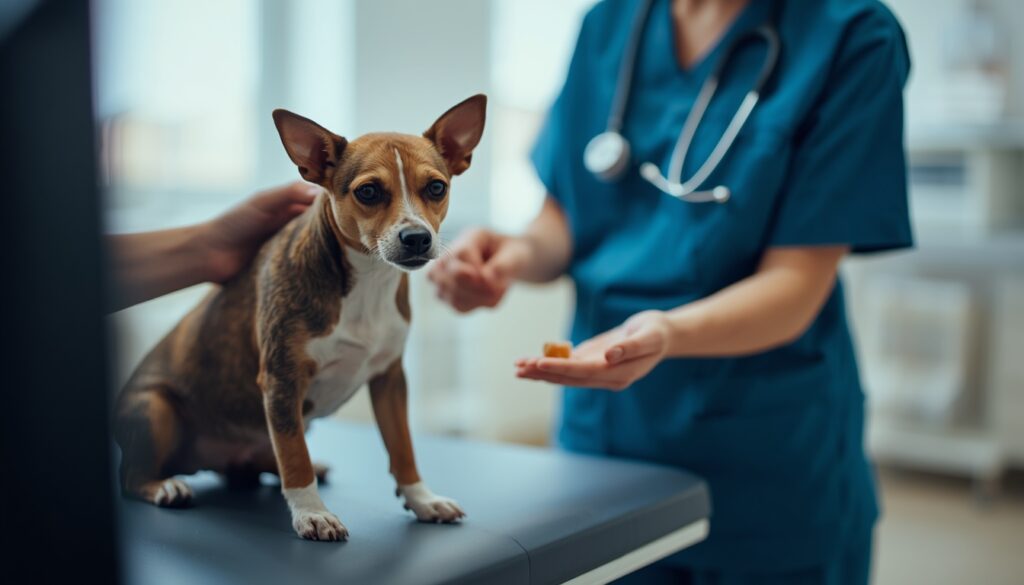
A closer look at fear of the vet
If your dog shakes in the waiting room, plants its feet at the clinic door or growls on the exam table, you are far from alone. A 2021 review of the research on fear in veterinary clinics reports that most dogs show some fear during a visit. In one study it describes, more than three-quarters of the dogs observed were rated as fearful in the exam room, and the exam table was the worst spot.
This matters for more than comfort. A frightened dog can have a faster heart rate and a higher temperature, and may hide a limp, so the exam tells the vet less. Fear can also tip into defensive aggression. And it keeps dogs away from care: in a survey quoted in the same review, about one in five dog owners said they would go to the vet more often if it were less stressful for their dog.
The good news is that fear of the vet is learned, and a lot of it can be unlearned or prevented. The plan has three parts: practice at home, a clinic that handles your dog gently, and, for some dogs, medicine before the visit.
Why dogs become afraid
- The place itself. Unfamiliar people, other animals, disinfectant smells, barking, and slippery floors and tables. The review notes that even stepping onto the scale raised signs of stress in about half of the dogs in one study.
- Being held still. Restraint is frightening for many dogs, and the more a dog struggles, the more firmly it tends to be held.
- Pain or discomfort. Needles, sore ears being cleaned, or anal glands being emptied. One painful visit can color the next ten.
- What the trip predicts. AAHA points out that a dog that only rides in the car to go to the vet learns that the car means something scary.
- Little early practice. Puppies that were never gently handled all over, or never visited a clinic just for treats, have nothing good to weigh against the bad.
- Being separated from you. In studies covered by the review, dogs had higher heart rates and blood pressure when their owner was absent, and higher heart rates in a shared treatment area than in an exam room with their owner.
Fear also feeds itself. A dog that is held down while the procedure is done anyway learns that the clinic is as bad as it feared, and the next visit starts from a worse place.
Signs your dog is afraid: green, amber, red
Dogs show fear with their bodies long before they bite. The AAHA behavior guidelines and the 2021 review list the signals below. Use them to judge how your dog is coping, at home and at the clinic.
| Level | What you see | What to do |
|---|---|---|
| Green: coping | Loose body, sniffs and explores the room, takes treats readily, approaches the staff. | Keep going. Keep the treats coming. |
| Amber: worried | Lip or nose licking, yawning, panting when it is not hot, ears back, tail low, turning the head away, lifting a paw, scanning the room, whining, taking treats roughly or slowly. | Slow down. Give more space, a break, or an easier step. |
| Red: over the limit | Refuses treats, trembles, freezes, hides behind you or tries to escape, tucked tail and crouched body, drooling, urinating or emptying the anal glands, stiffening, staring, growling, snapping. | Stop. Tell the team. Ask whether the visit can be changed, paused or rebooked with medication. |
A dog that goes still and quiet is not always calm: freezing is a fear response. Treats are a simple gauge. Cornell’s Riney Canine Health Center notes that when a dog stops eating treats, stress is likely too high.
Before the visit: practice at home
Trainers and vets use two methods together. Desensitization means exposing your dog to the scary thing in very small steps, staying at a level where your dog is relaxed. Counterconditioning means pairing each step with something your dog loves, so the thing predicts good news. The Merck Veterinary Manual describes relaxation as the key: if your dog gets worried, you go back a step.
The opposite approach, holding a dog in the frightening situation until it stops reacting, is called flooding. Merck describes it as far more stressful and warns that it can make fear worse.
A step-by-step plan
Work in sessions of a few minutes, with small, soft treats. Move to the next step only when your dog is loose and eager at the current one. If your dog walks away, let it, and make the next try easier.
| Step | What to practice | Ready to move on when |
|---|---|---|
| 1. Touch | Briefly touch a paw, an ear, the lips, the tail and the belly, giving a treat after each touch. Slowly hold each area a little longer. | Your dog leans in or looks for the treat when you reach for a paw or ear. |
| 2. Exam moves | Lift a lip to see the teeth, look in an ear, lift the tail, gently feel along the legs and belly, hold a paw as if trimming a nail, give a light hug as if steadying your dog. | Your dog stays relaxed for a few seconds of each. |
| 3. Surfaces | Teach your dog to step onto a non-slip mat or a low, stable platform for treats. Take the same mat to the clinic. | Your dog steps on as soon as the mat appears. |
| 4. Muzzle | Let your dog push its nose into a basket muzzle to reach food, long before you ever fasten it. | Your dog pushes its nose in by choice and wears it happily for a minute or two. |
| 5. Car | Short rides to places your dog enjoys, with treats, so the car does not only mean the vet. | Your dog gets in willingly and settles. |
| 6. Happy visits | Call the clinic and ask for a quiet time. Start with treats in the parking lot, then the door, the lobby, the scale and an exam room, over several trips. No exam, no needles. | Your dog pulls toward the door and takes treats from the staff. |
If your dog has ever bitten or tried to bite, or you are not making progress, get help before you go further. Start with your vet, who can check for pain or illness and refer you. The American Veterinary Society of Animal Behavior explains that a board-certified veterinary behaviorist (DACVB) is a vet with specialist residency training who can also prescribe, and that “behaviorist” and “trainer” are not regulated titles. It advises choosing someone who uses reward-based methods and avoiding anyone who relies on shock, choke or prong collars or talks about dominance.
Choosing and briefing your clinic
How a clinic handles your dog makes a large difference. When you choose a vet, ask whether the team uses low-stress handling. Cornell and AAHA both mention Fear Free and Low Stress Handling as training programs with that aim, and AAHA says its accredited hospitals use low-stress handling techniques. Ask practical questions too:
- Can we go straight into an exam room, or wait in the car until you text us?
- Can my dog be examined on the floor or on a non-slip mat instead of the table?
- Can I stay with my dog for the exam and for simple procedures such as vaccines and blood draws?
- Is there a quiet time of day, or a side entrance, for nervous dogs?
- Is there any extra charge for a longer appointment or a happy visit? (For typical exam fees, see how much a vet visit costs.)
- If my dog becomes too afraid, will you stop and make a new plan?
Then tell them about your dog when you book, not at the front desk. Say what your dog is afraid of, what has gone wrong before, and whether your dog has ever snapped. The AAHA guidelines suggest clinics book reactive dogs as the first or last appointment of the day, bring them in through a side or back door, and have the vet already in the room. They can only do that if they know in advance.
If you are looking for a clinic in Texas, the HeiBob directories for Houston vets and Austin vets list each clinic’s services and contact details, so you can call and ask these questions before you book.
On the day
- Bring a hungry dog. AAHA suggests skipping breakfast for food-motivated dogs so treats matter more. Check with your vet first if your dog is diabetic, very young or on medicine that must be given with food.
- Pack well. Small, soft, special treats, a lick mat or stuffable rubber toy with a spreadable snack, your dog’s non-slip mat or blanket, and the muzzle if your dog is trained to it.
- Skip the waiting room. Wait in the car or outside if the weather is safe. In one study in the review, dogs that waited in a clinic garden had lower heart rates and stress hormone levels than dogs in the waiting room. Never leave a dog alone in a warm car.
- Stay calm. Speak normally and keep the leash loose. Dogs pick up on tension.
- Feed through the scary parts. Offer treats as your dog steps on the scale, while the vet listens to the chest, and during the needle.
- Speak up. If you see red-level signs, say so. You know your dog’s signals better than anyone in the room.
What a low-stress visit looks like
Every clinic is different, but a visit planned around a fearful dog often goes like this:
- Arrival. You text from the car and are called when a room is free. Your dog walks straight in and steps onto a non-slip scale for a treat.
- Settling. The vet or technician lets your dog sniff around and approach while they take the history from you.
- The exam. It happens where your dog is most comfortable: on the floor, on its mat, or for a small dog on your lap. You stay close, feeding and talking to your dog.
- Handling. The team uses as little restraint as possible. The review suggests that if a dog struggles for more than two or three seconds, staff should pause and reposition, and change the approach if it keeps happening.
- Needles and samples. These are done in the room with you where possible, with food as a distraction.
- The stop point. If your dog reaches the red level, a good team stops. Options are to finish the essentials only, rebook with medication on board, or give sedation so the rest can be done safely and without a struggle.
Routine care can usually be rebooked. Urgent problems cannot: see when to take your dog to the emergency vet.
Medication and calming products
For a dog whose fear is already strong, training alone may be too slow, and each bad visit undoes the work. This is where vets use pre-visit medicines: anti-anxiety drugs you give at home before the appointment. Cornell notes they are often given a few hours ahead, and some plans include an amount the night before. Your vet will give exact instructions.
- What is used. VCA Animal Hospitals lists trazodone, gabapentin, clonidine, benzodiazepines and a dexmedetomidine gel placed on the gums, sometimes in combination. Your vet picks based on your dog’s age, health and other medicines. The right amount is individual and has to come from your vet.
- Timing matters. The medicine has to be working before your dog realizes where it is going. Given to a dog that is already panicking, it does much less.
- Expect adjustments. Many of these drugs are used off-label in dogs, and VCA notes that finding the right plan can take some trial and error. Tell your vet honestly how the visit went.
- Side effects. Sleepiness is the common one. A few dogs become more agitated instead of calmer on some drugs. Ask your vet what to watch for.
- Sedation alone is not the goal. Both VCA and the 2021 review say acepromazine is not recommended on its own for fear: a dog can look quiet while still being afraid.
- Car sickness. If your dog drools or vomits in the car, mention it. Your vet can prescribe something for it.
Pre-visit medicine does not replace gentle handling or training, and VCA notes it does not always remove the need for sedation at the clinic.
Pheromones, supplements and music
The evidence here is thinner. The review found mixed results for dog-appeasing pheromone products, and one study in which classical music did not reduce fearful behavior in dogs at the clinic. VCA says calming supplements may help mild stress but are unlikely to be enough alone for strong fear, are less tightly regulated than medicines, and should be cleared with your vet first because “natural” does not mean safe.
When fear might be pain
Not every dog that resists handling is simply afraid. A dog that has always been fine and now flinches when its ears are touched may have an ear infection. One that snaps when its back end is lifted may have sore hips or a spine problem. Tell your vet about any sudden change in how your dog accepts touch, at home or at the clinic. Pain relief given before a sore area is examined or treated is kinder and makes the next visit easier.
Puppies: preventing the problem
Prevention is easier than repair. Handle your puppy’s paws, ears, mouth and tail gently every day, with treats. Ask your clinic about happy visits between vaccine appointments, and feed treats during vaccines. Teach a basket muzzle as a game: the review suggests every dog would ideally be muzzle trained. And use reward-based training. Merck reports that dogs trained with rewards have fewer behavior problems and are less fearful.
What not to do
- Do not punish growling, shaking or pulling away. You remove the warning, not the fear.
- Do not drag a struggling dog in or hold it down yourself for a routine visit that could be rebooked with a better plan.
- Do not give human sedatives or another pet’s prescription.
- Do not skip care. Changing how the visit is done is the safer answer.
Questions to ask your vet
- What did you notice about my dog’s stress level today, and what would you change next time?
- Would pre-visit medicine suit my dog? When do I give it, and should we do a trial run at home first?
- Can I book happy visits, and who should I ask for?
- Could pain be part of this? Should we check or treat for it?
- Should we see a veterinary behaviorist or a reward-based trainer, and who do you recommend?
The outlook
Most fearful dogs improve when the pattern changes: easier visits, better treats, less restraint, and medicine where it is needed. Progress is gradual, and a painful emergency can set it back. Some dogs will always need a muzzle, medication or sedation for certain procedures. That is not a failure. The aim is a dog that can get the care it needs safely, with as little fear as possible.