
 Written by
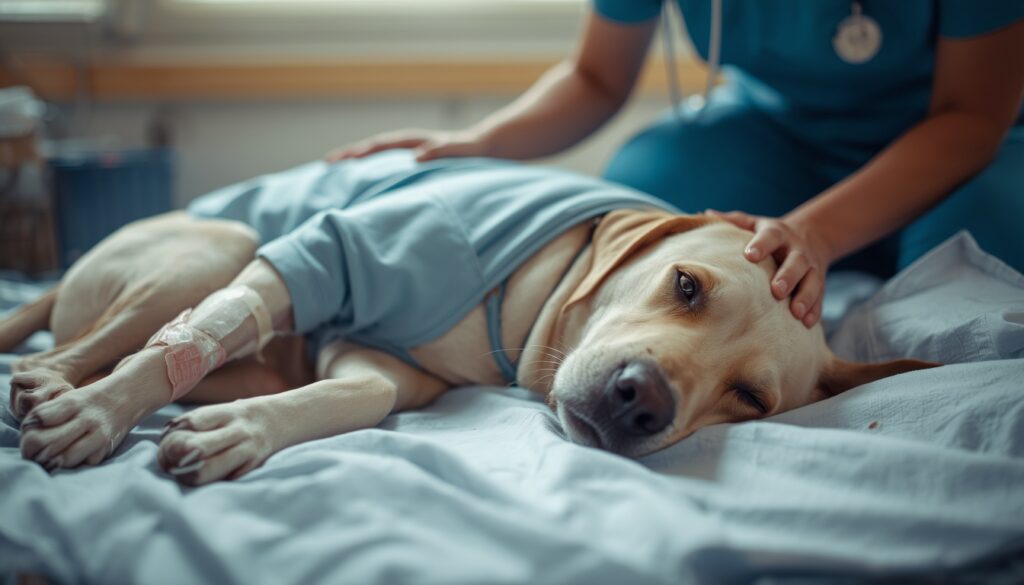
Splenectomy (say “splen-EK-tuh-mee”): surgery to remove the spleen. It is done in both dogs and cats.
Why a pet might need one
- A mass on the spleen. This is the most common reason. The mass may be benign, such as a hematoma, or cancer, such as hemangiosarcoma.
- Bleeding into the belly. A mass that bursts can bleed heavily. Vets call blood in the belly a hemoabdomen.
- A twisted spleen (splenic torsion), which cuts off the organ’s blood supply. It is seen most in large, deep-chested dogs.
- Injury, such as being hit by a car.
The American College of Veterinary Surgeons (ACVS) explains that removing the spleen is preferred over taking a biopsy, because it treats the problem and gives the lab the tissue needed for a firm diagnosis.
What happens at the vet
Before surgery
The team first finds out how stable your pet is. Expect an exam, blood tests including clotting tests, and imaging of the belly and chest, usually X-rays and an ultrasound. If there is fluid in the belly, a small sample shows whether it is blood. Some dogs have a heart scan as well. Blood may be typed in case a transfusion is needed.
A pet that has been bleeding is stabilized before the operation, usually with fluids into a vein and sometimes a blood transfusion.
The operation
Your pet is under general anesthesia. The surgeon makes a long incision in the belly, checks the other organs and takes samples of anything that looks abnormal. The blood vessels to the spleen are sealed or tied off, and the whole spleen is lifted out. A twisted spleen is removed without untwisting it first.
In large, deep-chested dogs, the surgeon may suggest a gastropexy at the same time. This stitches the stomach to the body wall to help prevent it from twisting in the future.
After surgery
Your pet recovers in a monitored ward with pain relief and fluids. Staff watch the heart rhythm and check for blood loss. The ACVS says most animals stay 24 to 48 hours. The spleen is sent to a pathologist, and your vet will tell you when to expect the result.
Risks
Every anesthetic carries some risk, and pets that have lost blood are at higher risk. The complications vets watch for after a splenectomy are:
- Bleeding during or after surgery.
- Irregular heart rhythms (arrhythmias). These are the reason for heart monitoring. The ACVS says some need treatment, but most settle within 24 to 48 hours.
- Pancreatitis, which often shows as vomiting.
- Incision problems, such as infection, fluid under the skin, or the wound opening.
- Aspiration pneumonia, a lung infection from breathing in stomach contents.
Most pets come through the operation itself. A 2024 review in Today’s Veterinary Practice cites a study in which 95 percent of dogs with bleeding in the belly survived to go home after splenectomy.
Recovery at home
- Rest for about two weeks. Short leash walks only, with no running, jumping or rough play, for the first 10 to 14 days.
- Protect the incision. Your pet may need a cone (e-collar) or a recovery shirt to stop licking. Check the wound every day.
- Give medicines exactly as your vet prescribes. Do not add human pain relievers.
- Go to the recheck, and ask when the pathology result is due.
Call your vet or an emergency clinic right away if you see
- Pale gums, weakness or collapse
- Fast or labored breathing
- A swollen belly
- Repeated vomiting or refusing food
- Redness, swelling, discharge or a gap at the incision
In Houston, see our list of 24-hour emergency vets.
Outlook
Pets do not need a spleen to live a normal life. What matters is what the lab finds. If the mass was benign, or the spleen was removed for a twist or an injury, surgery is generally a cure. If the result is cancer, your vet or an oncologist will talk through next steps, such as chemotherapy, and what to expect. Our hemangiosarcoma guide covers that conversation.
Cost
Costs vary a great deal with the clinic, whether the surgery is an emergency, and whether your pet needs intensive care or a transfusion. We have not published a price range here because we do not have a sourced one. Ask the clinic for a written estimate with a low and a high figure. For what a first exam and tests cost, see how much a vet visit costs.