
 Written by
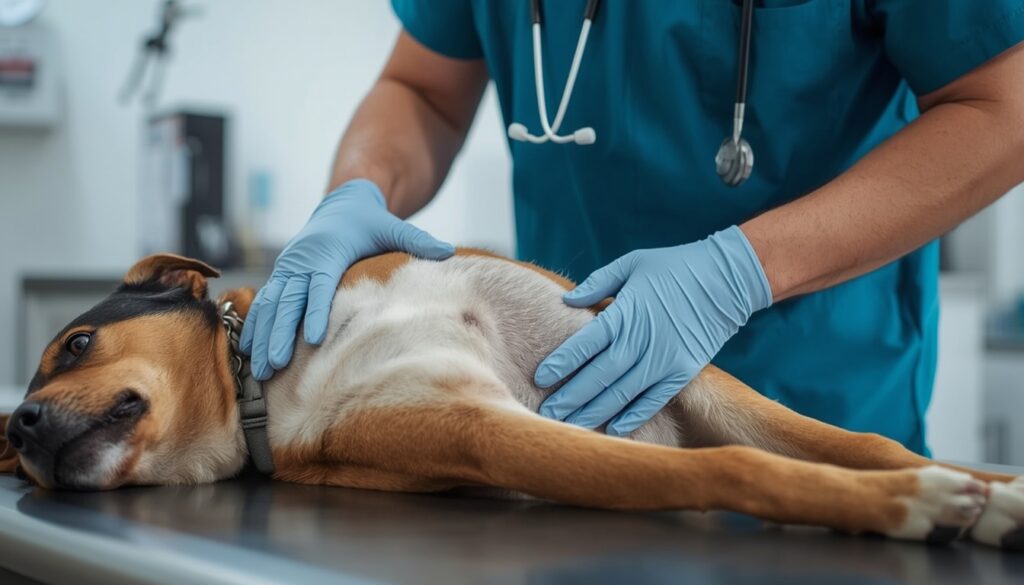
Spleen (say “spleen”): a soft, dark red organ in the belly that filters the blood, stores blood cells and helps the body fight infection. Dogs and cats each have one. It is useful, but not essential for life.
Where the spleen is
The spleen sits on the left side of the belly, toward the front, next to the stomach. A sheet of tissue called the gastrosplenic ligament joins it to the stomach. In dogs and cats it is long and narrow, a shape often compared to a tongue. Blood reaches it through the splenic artery and leaves through the splenic vein, which drains toward the liver.
Inside, the spleen has two kinds of tissue. The red pulp makes up most of the organ and is full of blood. The white pulp is immune tissue, packed with white blood cells.
What the spleen does
- Filters the blood. As blood passes through the red pulp, old, damaged or abnormal red blood cells are taken out of circulation.
- Stores blood cells. The spleen holds a reserve of red blood cells and platelets. A lot of blood sits in this one organ, which is why a damaged spleen can bleed so heavily.
- Helps fight infection. The white pulp works like a large lymph node for the bloodstream. It traps germs and other foreign material and helps make antibodies.
- Makes blood cells before birth. In the unborn puppy or kitten, the spleen is a main site of red blood cell production for a time.
What can go wrong
Masses and tumors
The spleen can grow a mass, or lump. Some are harmless. The American College of Veterinary Surgeons (ACVS) says benign lumps such as hematomas (pockets of clotted blood) and nodular hyperplasia make up 20 to 41 percent of splenic lesions, and removing the spleen cures them. Others are cancer. The most common cancer of the spleen in dogs is hemangiosarcoma, which the ACVS says typically affects dogs around 8 to 10 years old, with large breeds such as German Shepherds, Golden Retrievers and Labradors at higher risk. Our entry on spleen tumors in dogs has more.
Both benign and cancerous masses can burst and bleed into the belly. That is why vets take every splenic mass seriously.
A twisted spleen (splenic torsion)
The spleen can twist on the tissue that holds it, which cuts off its blood supply. The University of Illinois veterinary school notes this is seen most often in large, deep-chested dogs and can happen along with bloat. It needs surgery.
An enlarged spleen
The whole spleen can swell without a single lump. Causes include infection, cancers such as lymphoma, and diseases that affect the whole body. The MSD Veterinary Manual notes that dogs whose immune system is destroying their own red blood cells may have an enlarged spleen along with pale or yellow gums.
Injury
A hard blow, such as being hit by a car, can tear the spleen and cause internal bleeding.
Emergency or wait?
Go to an emergency vet now if your pet has any of these:
- Pale or white gums
- Sudden weakness, wobbliness or collapse
- A belly that looks swollen or tight
- Fast breathing or a racing heart at rest
- A spell of weakness that passed and has come back
These can mean bleeding inside the belly. Houston readers can find a 24-hour emergency vet in Houston here.
Book a vet visit this week for slower signs: low energy, a poor appetite, weight loss, vomiting, or a belly that seems to be getting bigger. A spleen mass is sometimes found by chance at a routine checkup, which is one more reason to keep up with a yearly exam.
How vets check the spleen
Your vet starts by feeling the belly and checking gum color and heart rate. From there, the usual tests are:
- Blood tests, to look for anemia and check clotting.
- X-rays, for an overview of the size and shape of the organs and to check the chest.
- Abdominal ultrasound, to look inside the spleen, find a mass and spot free blood or fluid.
- A heart scan (echocardiogram) in some dogs, because some spleen tumors also affect the heart.
The ACVS points out that needle samples often cannot tell a benign mass from a cancerous one. A firm answer usually needs the spleen to be removed and examined under a microscope. That operation is called a splenectomy.
Life without a spleen
Dogs and cats can live normally without a spleen. Ethos Veterinary Health, a US specialty hospital group, states that spleens can be removed without significant compromise to a pet’s long-term health. How a pet does afterward depends on the reason for surgery. If the spleen was removed for a benign mass, a twist or an injury, the outlook is generally excellent. If the cause was cancer, the outlook depends on the type of cancer and whether it has spread.
If your pet has had its spleen removed, tell any new vet, so it is on the record.