Complete Guide to Dog Training Methods (2026): Techniques, Costs & What Actually Works
The most effective dog training methods in 2026 combine positive reinforcement with consistency and timing — rewarding good behavior the instant it happens produces faster, longer-lasting results than punishment-based approaches. Whether you have a new puppy or an adult dog with challenging habits, this guide covers every major training method, realistic costs, and how to choose the right approach for your dog.
This guide is for informational purposes. Always consult a certified professional trainer for behavioral issues. Pricing data reflects US national averages as of June 2026.
The 5 Major Dog Training Methods Explained
Modern dog training has evolved significantly over the past decade. While old-school “dominance theory” approaches once dominated, scientific research and veterinary consensus now firmly supports reward-based methods. Here are the five most widely used training frameworks:
1. Positive Reinforcement (R+)
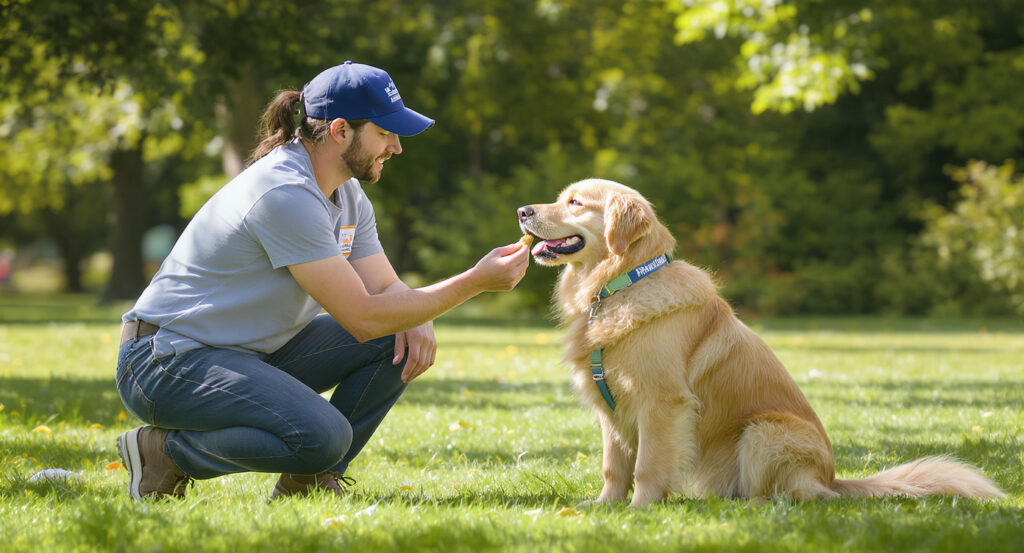
Positive reinforcement is the gold standard endorsed by the American Veterinary Society of Animal Behavior (AVSAB) and most certified professional trainers. The principle is simple: reward the behavior you want, and that behavior becomes more likely to repeat. Rewards include treats, praise, play, or anything your dog finds motivating.
- Best for: All dogs and all ages — especially puppies and anxious dogs
- Pros: Builds trust, scientifically validated, long-lasting results, no risk of fear/aggression side effects
- Cons: Requires consistency and timing; may need management tools in early stages
2. Clicker Training
Clicker training is a specific form of positive reinforcement using a small clicker device to “mark” the exact moment a dog performs the desired behavior, followed immediately by a treat. The click bridges the gap between the behavior and the reward, providing precise communication. It is one of the fastest ways to teach new behaviors.
- Best for: Dogs learning precise commands, agility, trick training
- Pros: Extremely precise, fast learning, fun for dog and owner
- Cons: Requires hands-free coordination; clicker must always be paired with reward
3. Model-Rival / Mirror Training
Developed by Dr. Irene Pepperberg, this method uses a “model” (often another dog or person) to demonstrate the desired behavior, creating a social learning context. The dog watches the model receive praise for correct behavior and learns by observation. Less common but effective for highly social breeds.
- Best for: Social, observant breeds like Border Collies, Poodles
- Pros: Leverages natural social learning, builds complex behaviors
- Cons: Requires a well-trained model dog; time-intensive setup
4. Electronic/Remote Training (E-collar)
E-collar training uses a remote-controlled device to deliver a mild stimulation to get a dog’s attention or interrupt behavior. Modern professional use typically involves very low-level stimulation as a communication tool, not punishment. However, this method is controversial and should only be used by certified professionals — misuse can cause fear, pain, and aggression.
- Best for: Off-leash reliability work in experienced professional hands only
- Pros: Can achieve reliable off-leash response at distance
- Cons: High risk of misuse; not recommended for pet owners without professional guidance; banned in several countries
5. Science-Based / LIMA Training
LIMA stands for “Least Intrusive, Minimally Aversive” — a framework adopted by the International Association of Animal Behavior Consultants (IAABC). It prioritizes the least invasive, least punishing methods that are still effective. Most certified professional trainers today operate within this framework, starting with positive reinforcement and only escalating if necessary.
- Best for: Dogs with behavioral problems, fear, or aggression
- Pros: Ethical, evidence-based, adaptable
- Cons: Requires trainer certification to implement correctly
Which Training Method Is Right for Your Dog?
The best training method depends on your dog’s age, temperament, and what you’re trying to achieve. Here’s a quick-reference comparison:
| Method | Best Age | Difficulty | Time to Results | Recommended For |
|---|---|---|---|---|
| Positive Reinforcement | All ages | Beginner–Intermediate | 2–6 weeks | All dogs, especially puppies |
| Clicker Training | 8 weeks+ | Intermediate | 1–4 weeks per skill | Trick training, precision commands |
| Model-Rival | 3 months+ | Advanced | 4–12 weeks | Highly social, intelligent breeds |
| E-collar | 6 months+ | Professional only | Variable | Off-leash reliability (pro use only) |
| LIMA / Science-Based | All ages | Intermediate–Advanced | 4–12 weeks | Fearful, reactive, or aggressive dogs |
Source: AVSAB, IAABC training guidelines; HomeGuide 2026 pricing data

Essential Commands Every Dog Should Know
Regardless of which training method you use, these core commands form the foundation of a well-behaved dog. Master these before moving to more advanced work:
The 7 Foundation Commands
- Sit — The gateway command; the first most dogs learn. Hold a treat above the nose, move it back over the head — the dog’s rear naturally drops.
- Stay — Ask for “sit,” mark the second they comply, then slowly increase distance and duration before releasing with “OK” or “free.”
- Come (Recall) — The most important safety command. Practice on a long line first, always reward heavily — never use “come” to do something the dog dislikes.
- Down — From “sit,” lure a treat from the nose straight down to the floor. Click/treat the moment elbows touch the ground.
- Leave It — Essential for safety. Place a treat on the floor, cover it — when the dog stops trying to get it and looks at you, reward with a different treat.
- Drop It — Offer a high-value treat exchange to teach releasing objects on cue. Never chase or grab — that teaches “keep-away.”
- Heel/Walk Nicely — Reward the dog for being beside your left leg. Stop when they pull; forward momentum only happens when the leash is loose.
For dogs who need structured help with these foundations, explore professional dog training services near you on HeiBob.
Training Session Guidelines
- Keep sessions to 5–10 minutes — dogs lose focus quickly
- Train 2–3 times per day for fastest progress
- Always end on a success — finish with something easy the dog knows well
- Train before meals when food motivation is highest
- Practice in multiple environments to build generalization (home → yard → park → street)
Dog Training Costs in 2026
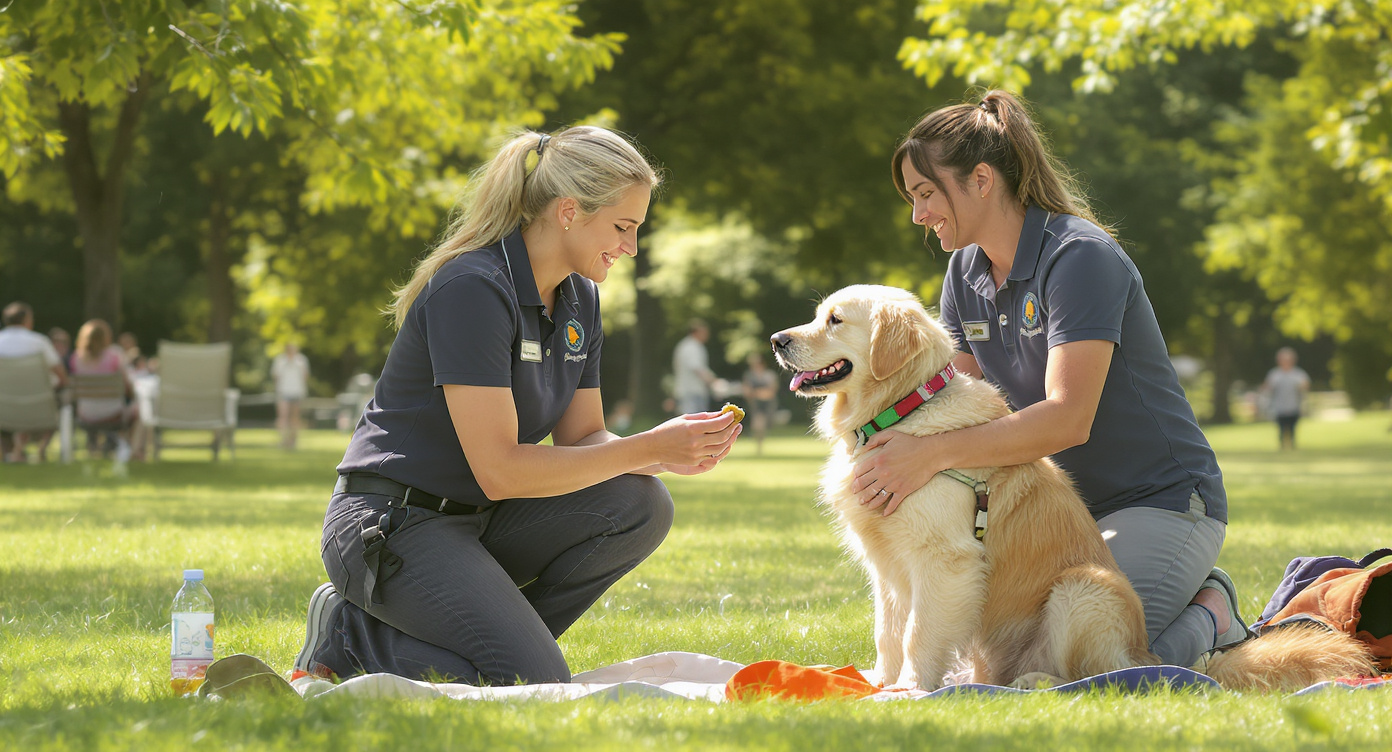
Training costs vary significantly by format, location, and trainer experience. Here’s what you can expect to pay across the US in 2026:
| Training Format | Cost Per Session | Package / Program Cost | Duration |
|---|---|---|---|
| Group obedience class | $30–$80 | $120–$600 (4–8 week course) | 60 min/week |
| Private in-home training | $75–$200 | $500–$1,500 (6–8 sessions) | 45–60 min/session |
| Board & Train (day) | $50–$100/day | $500–$1,200 (2-week program) | Full day intensive |
| Board & Train (overnight) | $100–$250/night | $1,000–$3,500 (2–4 weeks) | 24/7 immersive |
| Puppy kindergarten | $25–$60 | $100–$350 (4–6 week course) | 45–60 min/week |
| Behavioral consultation | $150–$350 | $500–$2,000 (follow-up plan) | 60–90 min initial |
| Online / video training | $15–$50 | $50–$300 (full course) | Self-paced |
Source: HomeGuide.com, DogTrainerMatch.com, Bark.com — June 2026 averages
Urban vs. Rural pricing: Trainers in cities like NYC, San Francisco, or Los Angeles typically charge 30–50% more than the national average. Search for affordable dog trainers in your area via HeiBob to compare local pricing directly.
Professional Trainer vs. DIY Training: Which Should You Choose?
Both approaches have merit — the right choice depends on your dog’s needs, your budget, and your available time.
When DIY Training Works Well
- Your dog is a puppy with no major behavioral issues
- You’re teaching basic commands (sit, stay, come, down)
- You have 15–30 minutes per day to dedicate consistently
- You’ve done some research and understand reward timing
- Budget is limited — books, YouTube channels, and apps cost under $50
When You Need a Professional Trainer
- Aggression toward people or other dogs — always seek a certified professional (CPDT-KA, IAABC, or veterinary behaviorist)
- Separation anxiety — complex condition requiring structured desensitization protocols
- Fear and reactivity — improper handling can make these significantly worse
- Adult rescue dogs with unknown history — professional assessment prevents missteps
- You’ve tried DIY and aren’t making progress — an experienced eye often spots the issue immediately
For serious behavioral issues, you may need a veterinary behaviorist (DACVB) — a veterinarian with specialist training in animal behavior. These professionals can prescribe medication alongside behavior modification when needed. Expect fees of $300–$500+ for an initial consultation.
6 Common Dog Training Mistakes to Avoid
- Inconsistent commands: Using “down” sometimes and “lie down” other times confuses dogs. Pick one word per behavior and ensure everyone in the household uses the same cue.
- Delayed rewards: Timing is everything. If you reward 5 seconds after the sit, you may actually be rewarding the dog for standing up. Reward within 1–2 seconds of the desired behavior.
- Too-long sessions: Puppies have attention spans of 5 minutes or less. Long sessions lead to frustration, not learning. Multiple short sessions beat one long one every time.
- Training only at home: Dogs don’t generalize well. A dog that sits perfectly in the kitchen may not respond at the park. Gradually practice in new environments with increasing distractions.
- Punishing fear: If your dog is afraid of something and you punish the fearful behavior (growling, cowering), you suppress the warning sign without addressing the underlying fear — often leading to biting “out of nowhere.”
- Stopping training after basics: Training is ongoing. Dogs that stop receiving mental stimulation through training often develop boredom-based behavioral problems. Advanced classes, puzzle feeders, and tricks keep dogs engaged.
How to Find a Certified Dog Trainer
Not all dog trainers are created equal — the industry is unregulated, meaning anyone can call themselves a trainer. Here’s how to vet a professional:
Key Certifications to Look For
- CPDT-KA (Certified Professional Dog Trainer – Knowledge Assessed) — the most widely recognized credential, from the Certification Council for Professional Dog Trainers
- CDBC (Certified Dog Behavior Consultant) — from the IAABC, focused on behavioral problems
- KPA-CTP (Karen Pryor Academy Certified Training Partner) — strong positive reinforcement credential
- DACVB (Diplomate, American College of Veterinary Behaviorists) — veterinary specialist for serious behavioral/medical cases
Questions to Ask Before Hiring
- What certifications do you hold, and are they current?
- What training methods do you use — do you use aversive tools like prong collars or e-collars?
- Can I observe a session with another client before committing?
- What is your experience with my dog’s specific issue?
- What does a typical session look like?
Use HeiBob’s dog training directory to find certified trainers in your city — for example, dog trainers in Austin or dog trainers in Chicago.
📖 More Pet Care Guides
Best Veterinary Clinics in Phoenix, AZ (2026)
Discover the best veterinary clinics in Phoenix, AZ in 2026. Compare top-rated vets across Arcadia…
Best Dog Walkers in Seattle, WA (2026)
Seattle’s best dog walking services compared — prices, neighborhoods, and what to look for…
Ultimate Guide to Pet Grooming Services (2026)
A complete guide to pet grooming services in 2026. Covers every type of grooming, costs, and what to expect…
Frequently Asked Questions About Dog Training Methods
What is the most effective dog training method in 2026?
How long does it take to train a dog?
Is it too late to train an adult or older dog?
How much does professional dog training cost in the US?
Should I use treats forever, or can I phase them out?
What certifications should a dog trainer have?
What’s the difference between a dog trainer and a behaviorist?
Ready to Find a Dog Trainer Near You?
Browse certified, reviewed dog trainers on HeiBob — compare methods, prices, and availability in your city.
Find Dog Trainers Near Me →



Leave a Reply
You must be logged in to post a comment.