Moving across the country with a dog or cat usually comes down to one choice: drive them (or hire a ground pet transporter) or fly them. Both can be safe when they are planned well, but they differ a lot on cost, time in transit, paperwork and which pets they suit. If you are relocating from Texas, you can compare pet transport services in Houston to get real quotes before you decide.
Quick answer: Ground transport usually suits large dogs, snub-nosed breeds, anxious pets and multi-pet households, and it keeps your pet with a person the whole way. Air travel is faster and often the only practical option for very long or overseas moves, and flying a small pet in the cabin with you can be the cheapest option of all. For most cross-country moves with a medium or large dog, ground transport is the lower-stress choice; for small pets that fit under a seat, flying in-cabin is hard to beat.
How ground pet transport works
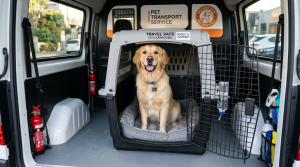
Ground pet transport means your pet travels by road, either in your own car or with a professional pet transporter. Professional ground services use climate-controlled vans with secured crates, stop regularly for potty breaks, water and meals, and drive the route in stages. Options range from shared routes (your pet rides with other pets on a scheduled run) to private, door-to-door trips with only your animals on board.
The trade-off is time. A coast-to-coast trip can take several days on a shared route because the van picks up and drops off other pets along the way. Ask how many hours per day the driver is on the road, where pets sleep overnight, and whether there are two drivers for long runs.
How air pet transport works
Air travel for pets falls into three main types:
- In-cabin: small dogs and cats in a soft carrier that fits under the seat in front of you, flying with you as carry-on.
- Checked or cargo with the owner: larger pets fly in a temperature- and pressure-controlled hold on the same flight as you, where the airline still offers this.
- Manifest cargo through a pet shipper: a professional pet relocation company books the flight, handles drop-off and pickup, and manages paperwork. This is common for unaccompanied pets and international moves.
Air rules vary by airline and change often. Many airlines limit or refuse snub-nosed (brachycephalic) breeds in the hold, set seasonal temperature embargoes, and require a travel crate that meets strict size and ventilation rules. If your dog has a flat face, read our page on brachycephalic obstructive airway syndrome before you book anything.
Ground vs air pet transport at a glance
| Factor | Ground transport | Air transport |
|---|---|---|
| Typical time cross-country | About 2 to 7 days depending on route and stops | Same day or next day, including drop-off and pickup |
| Rough cost range (domestic) | A few hundred dollars for short regional trips; often $1,000 to $2,500+ for long private routes | Airline in-cabin pet fee often around $100 to $200 each way; full-service pet shipper often $1,000 to $3,000+ |
| Best for | Large dogs, snub-nosed breeds, seniors, anxious pets, multiple pets | Small pets in-cabin, very long distances, overseas moves, tight timelines |
| Human contact during trip | Driver checks on pets throughout | Limited once your pet is checked into the hold |
| Paperwork | Vaccination records, rabies certificate, sometimes a health certificate for interstate moves | Airline health certificate (often within about 10 days of travel), approved crate, extra rules for international trips |
| Main risks | Long days in a vehicle, car sickness, heat if a van is poorly run | Temperature exposure, breathing trouble for flat-faced breeds, missed connections |
Cost and time ranges are rough planning estimates; real quotes depend on distance, pet size, number of pets, season and the provider.
What drives the price
For ground transport, the biggest factors are distance, whether the trip is private or shared, how many pets ride, and whether you need door-to-door pickup. Private trips cost more but finish faster. For air, price depends on the pet’s size (which sets the crate size and cargo weight), whether a pet shipper handles the move, whether you need a direct flight, and any vet visits and paperwork. Remember to budget for the vet visit, a travel crate that meets airline or transporter rules, and any boarding needed while you settle in.
Tip: Whichever way your pet travels, start crate or carrier practice two to four weeks ahead. Short, positive sessions make a big difference on travel day. If you still need one, compare soft and hard-shell pet carriers and check your airline’s size rules before you buy. Our guide to cat carrier training covers the same approach that works for small dogs too.
When ground transport is the better choice
- Your dog is large, a snub-nosed breed, a senior, or has heart or breathing issues.
- Your pet panics in crates or around loud noise, and having a driver nearby helps.
- You are moving several pets at once and want them on one trip.
- You are traveling in summer or winter, when airlines may restrict cargo pets.
- Your pet tends to get car sick only on short trips and settles on long drives (ask your vet about motion sickness in dogs first).
When air transport is the better choice
- Your cat or small dog fits in an under-seat carrier and can fly in the cabin with you.
- The move is very long (for example, to Hawaii or overseas) and days on the road are not realistic.
- You need your pet at the new home quickly and a reputable pet shipper can handle every step.
- Your pet is young, healthy and not a flat-faced breed.
Questions to ask any pet transporter
- Are you registered with the USDA as a commercial animal carrier, and can I see proof of insurance?
- Is the vehicle or cargo area climate-controlled, and how is temperature monitored?
- How often do pets get breaks, water and food, and where do they stay overnight?
- Will I get photo or GPS updates during the trip?
- What paperwork do you need, and do you require a vet health certificate?
- What happens if there is a delay, a breakdown or a missed flight?
Before any move, make sure your pet’s microchip is registered with your new address and phone number, and keep vaccination records in your carry-on or glove box.
FAQ
Is ground or air transport safer for pets?
Both can be safe with a reputable provider. Ground transport keeps a person with your pet throughout and avoids cargo-hold risks, which is why many owners of large or flat-faced dogs prefer it. Air is quicker and can be very safe for healthy pets, especially small pets flying in-cabin.
Can I sedate my pet for travel?
Do not sedate a pet for travel without talking to your vet. Many airlines discourage or refuse sedated pets because sedation can affect breathing and balance. Your vet can suggest safer options for anxious pets.
How far ahead should I book pet transport?
Aim for at least three to four weeks for domestic moves, and longer in peak moving season. International moves often need several months because of vaccine timing and import rules.
Planning a move with your pet?
Compare local pet transport providers, read details and reach out for quotes before you book.
Not in Houston? Browse pet transport nationwide.
Related reads
- Pet transport services directory
- Pet boarding in Houston, TX (handy while you settle into a new home)
- Pet transport: complete guide
- Pet boarding vs pet sitting



Leave a Reply
You must be logged in to post a comment.