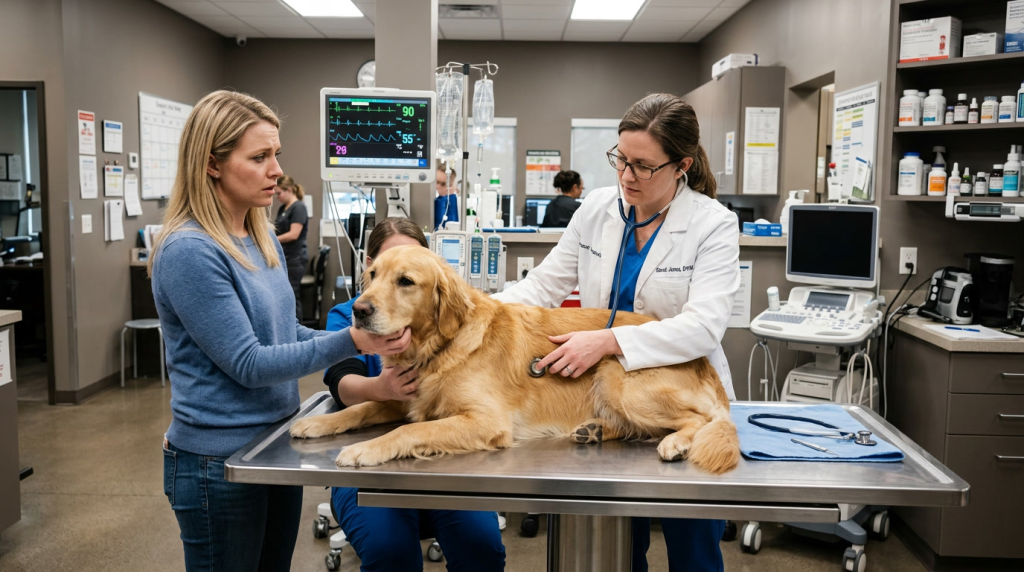
When your pet is sick or injured, one question dominates your mind: does this need an emergency vet, or can it wait for my regular vet? Emergency vets are open 24/7 and handle life-threatening crises, while your primary care vet handles routine and non-urgent care during business hours. Knowing the difference can save your pet’s life — and save you hundreds of dollars in unnecessary emergency fees.
This guide is for informational purposes. Always contact your veterinarian or an emergency clinic directly for personalized medical advice about your pet’s condition.
The Three Types of Vet Care (and When Each Makes Sense)
Most pet owners think of vet care as binary — regular vet or emergency vet. But there’s actually a third option that many pet parents overlook: urgent care vet clinics. Understanding all three can help you make smarter, faster decisions for your pet and your wallet.
1. Regular/Primary Care Vet
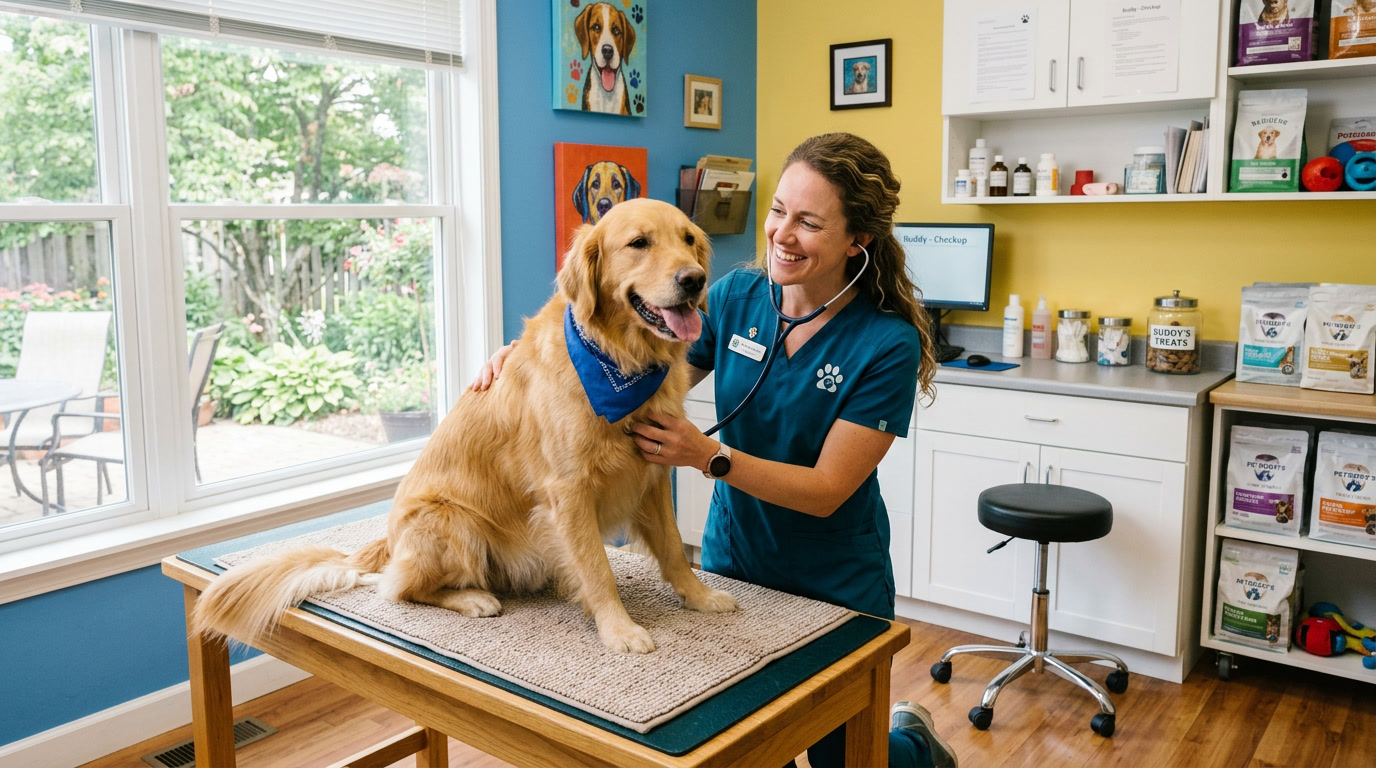
Your primary care vet is your pet’s family doctor. They know your pet’s history, manage chronic conditions, and provide routine care like vaccines, annual checkups, and dental cleanings. Appointments are scheduled in advance, and most clinics are open Monday–Saturday during business hours.
Best for: Wellness exams, vaccinations, routine bloodwork, chronic disease management, follow-up care, and non-urgent illnesses such as a mild cough, ear infection, or stable limping.
2. Urgent Care Vet Clinic
Urgent care vet clinics are the middle ground — they accept walk-ins for problems that need same-day attention but aren’t immediately life-threatening. Many are open evenings and weekends. Think of them like a human urgent care clinic: faster than waiting for your regular vet, much cheaper than a full emergency hospital.
Best for: Vomiting once or twice, mild limping, suspected minor infections, non-severe allergic reactions, and small wounds that need cleaning.
3. Emergency/24-Hour Animal Hospital
Emergency animal hospitals are staffed 24/7 by veterinarians trained in critical care. They have on-site imaging (X-ray, ultrasound), surgical suites, and ICU facilities. They exist for situations where every minute matters.
Best for: True emergencies — difficulty breathing, suspected poisoning, collapse, seizures, severe trauma, bloat (GDV), urinary blockages, and uncontrolled bleeding.
Emergency Vet: 15 Signs You Need to Go NOW
These symptoms require immediate emergency veterinary care. Do not wait for your regular vet to open — go directly to the nearest 24-hour animal hospital.
- Difficulty breathing or labored breathing — open-mouth breathing in cats is always an emergency
- Collapse or sudden inability to stand
- Suspected poisoning or toxin ingestion — chocolate, xylitol, grapes, medications, household chemicals
- Unproductive retching with a distended abdomen — signs of bloat (GDV), which is fatal within hours in large dogs
- Seizures or convulsions
- Severe trauma — hit by a car, fall from height, attack by another animal
- Uncontrolled bleeding that doesn’t stop within 5–10 minutes of direct pressure
- Loss of consciousness or extreme lethargy
- Male cats straining to urinate or crying in the litter box — urinary blockage is life-threatening
- Pale, white, blue, or grey gums
- Eye injuries or sudden vision loss
- Suspected broken bones
- Heatstroke signs — excessive panting, drooling, confusion after being in a hot environment
- Birthing complications — straining for more than 30 minutes without producing a puppy or kitten
- Sudden paralysis or dragging of hind legs
If you’re unsure whether to go: Call the emergency clinic first. Most will advise you over the phone — that call is free and could save your pet’s life.

Regular Vet: Signs You Can (Safely) Wait
Not every sick pet needs emergency care. Many conditions are uncomfortable but not immediately dangerous, and your regular vet — at routine pricing — is the right call. These are signs you can typically wait for a next-day or same-week appointment:
- Mild vomiting (once or twice, pet is otherwise alert and acting normally)
- Soft stools or mild diarrhea without blood
- Decreased appetite for less than 24 hours in an otherwise normal pet
- Minor limping that has been stable — not worsening — for 1–2 days
- Ear scratching or head shaking (likely an ear infection)
- Skin irritation, itching, or a hot spot
- Sneezing or mild nasal discharge without difficulty breathing
- Small, slow-growing lumps (schedule within a few weeks)
If you’re ever in doubt, call your vet’s office even after hours — most clinics have an answering service or on-call vet who can help you assess urgency over the phone at no cost.
Cost Comparison: Emergency vs Regular vs Urgent Care (2026)
One of the biggest factors in choosing where to go is cost. Emergency veterinary care is significantly more expensive than routine care — but sometimes it’s the only option. Here’s how the numbers break down in 2026:
| Type of Care | Exam Fee | Typical Total Visit | Hours |
|---|---|---|---|
| Regular Vet | $50–$100 | $100–$400 | Mon–Sat, business hours |
| Urgent Care Vet | $100–$175 | $150–$500 | Extended hours, walk-in |
| Emergency Hospital | $100–$250 | $800–$5,000+ | 24/7, 365 days |
| Emergency Surgery | — | $2,000–$8,000+ | 24/7 |
Source: Webvet, PawLicy Advisor, Spot Pet Insurance, 2026 estimates. Prices vary by location, pet size, and condition severity.
The emergency fee premium exists for good reason: 24/7 staffing, on-call specialists, and immediate diagnostic equipment all carry significant overhead. If your pet’s condition is non-life-threatening and your regular vet is open, you’ll typically save $400–$2,000 by calling them first.
Quick Decision Guide: Emergency vs Regular Vet
Use this checklist when you’re unsure what to do:
🚨 Go to the Emergency Vet NOW if your pet has ANY of these:
- Trouble breathing, blue or pale gums, or loss of consciousness
- Cannot urinate (especially male cats)
- Suspected poisoning — even if symptoms seem mild
- Seizure, collapse, or severe trauma
- Unproductive retching or vomiting with a swollen belly
📅 Schedule with Your Regular Vet if:
- Symptoms are mild and your pet is alert and comfortable
- The issue has been developing slowly over several days
- Your vet can see you same-day or next day
- The condition is not worsening hour by hour
🏥 Consider Urgent Care if:
- Your vet is closed but this isn’t a true emergency
- Your pet needs same-day attention but is stable
- You want professional assessment without full ER-level costs
Pet Insurance and Emergency Vet Costs
Pet insurance can make the difference between life and death when an emergency strikes. Most comprehensive pet insurance plans cover emergency vet visits, surgery, and hospitalization — typically reimbursing 70–90% of covered costs after your deductible.
If you don’t have pet insurance and face a large emergency bill, ask the clinic about:
- CareCredit — a healthcare credit card accepted at many vet clinics, with 0% APR promotional periods
- Payment plans — many emergency hospitals work with families on structured payment arrangements
- Scratchpay — a financing option designed specifically for veterinary care
Find veterinary clinics and emergency animal hospitals near you on HeiBob — searchable by city and service type.
Frequently Asked Questions About Emergency Vet vs Regular Vet
What is the difference between an emergency vet and a regular vet?
How much does an emergency vet visit cost in 2026?
Can I call an emergency vet for advice before going in?
What are the most common pet emergencies?
Is an urgent care vet cheaper than an emergency vet?
What should I bring to an emergency vet visit?
📖 More Pet Care Guides
Best Pet Shops in Houston, TX (2026)
Top picks for every pet owner in Houston, from big-box stores to local boutiques…
How to Choose a Dog Trainer: Complete Guide (2026)
What to look for in a trainer, red flags to avoid, and how to compare certifications…
Best Dog Training in Austin, TX (2026)
Top trainers, classes, and prices in Austin — from basic obedience to advanced…
Find Vets and Emergency Animal Hospitals Near You
Don’t wait until an emergency strikes to find your nearest 24-hour animal hospital. Browse veterinary clinics and emergency animal hospitals on HeiBob — searchable by city, specialty, and service type. You can also explore vets in Austin, vets in Houston, vets in Los Angeles, and hundreds of other US cities. Bookmark your nearest emergency vet today — you’ll be glad you did when it matters most.




Leave a Reply
You must be logged in to post a comment.