
Pet Boarding vs Pet Sitting: Which Is Better for Your Dog? (2026 Guide)
Trying to decide between pet boarding and pet sitting for your next trip? Both options keep your pet safe while you’re away — but they differ significantly in cost, environment, and the type of care your pet receives. This guide breaks down the real differences so you can make the right call for your specific pet and budget in 2026.
This guide is for informational purposes. Always contact providers directly for current pricing and availability.
What Is Pet Boarding?
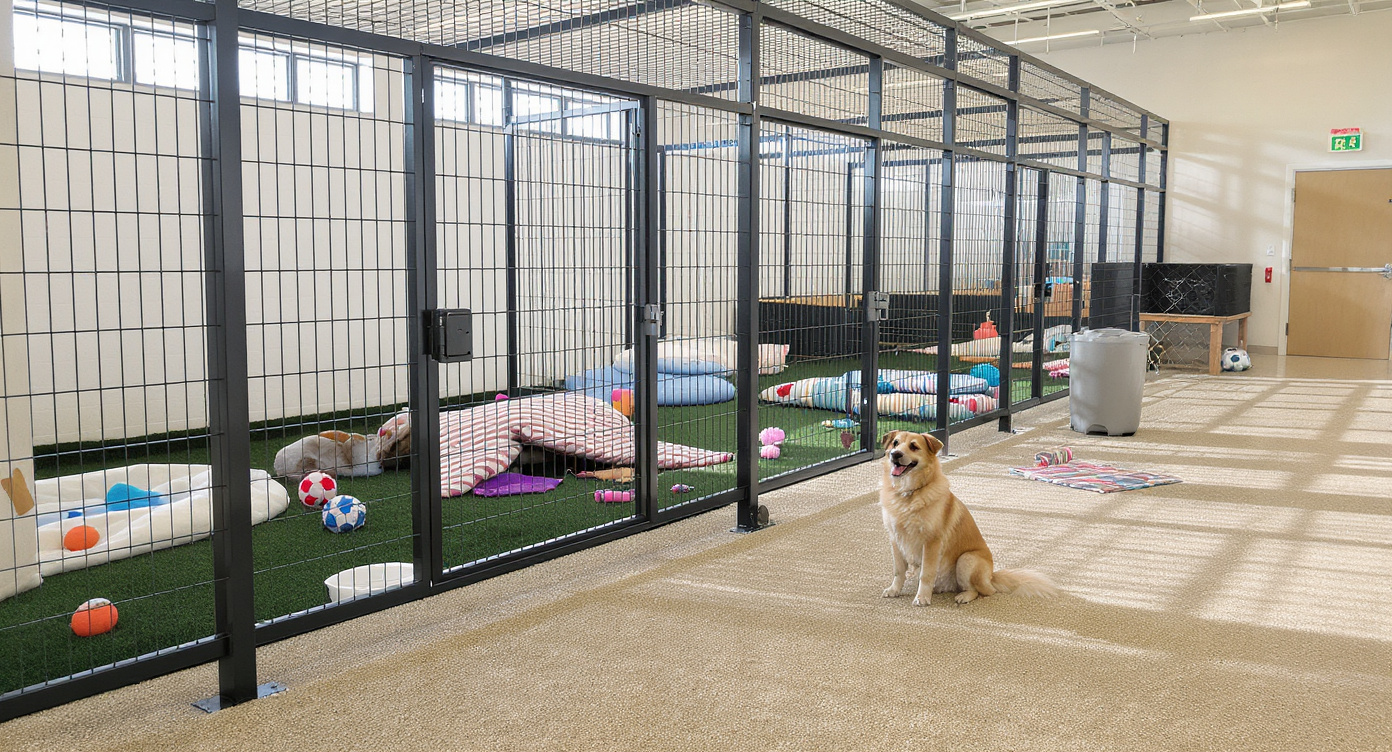
Pet boarding means your dog or cat stays at a dedicated facility — a kennel, pet resort, or veterinary clinic — while you’re away. Your pet sleeps in an individual run or suite (typically 4×6 feet for medium-sized dogs) alongside 20–100 other pets, following the facility’s set schedule for feeding, potty breaks, and exercise.
Modern boarding facilities have evolved significantly. Today’s premium pet resorts offer webcams, agility courses, grooming add-ons, swimming pools, and private suites with real beds. Budget kennels still exist, but the industry has dramatically upgraded its offerings over the past decade.
- Supervised 24/7: Most boarding facilities have overnight staff or live-in caretakers
- Socialization: Group play sessions are usually available at an add-on fee
- Medical support: Vet-affiliated facilities can handle minor emergencies on-site
- Set schedule: Your pet follows the facility’s routine, not their home routine
Browse pet boarding facilities near you on HeiBob to compare local options, read reviews, and check pricing.
What Is Pet Sitting?

Pet sitting means a trusted person looks after your pet — either in your home, in the sitter’s home, or through drop-in visits. Your pet stays in a familiar environment, maintains their normal routine, and receives one-on-one attention from a single consistent caretaker.
Pet sitters can be professional (certified, insured, background-checked) or informal (a neighbor, friend, or family member). Professional sitters often hold Pet Sitters International (PSI) or NAPPS certification and carry liability insurance.
- In-home sitting: Sitter comes to your house — your pet never leaves home
- Sitter’s home: Your pet stays with the sitter in a home environment, often with far fewer other pets than a kennel
- Drop-in visits: Sitter checks in 1–3 times per day — ideal for cats or lower-maintenance dogs
- Personalized care: Your pet’s routine, diet, and preferences are followed exactly
Cost Comparison: Pet Boarding vs Pet Sitting (2026 Prices)
Cost is often the deciding factor. Here’s a realistic breakdown of what you can expect to pay in the US in 2026:
| Service Type | Budget | Mid-Range | Premium |
|---|---|---|---|
| Standard Boarding (kennel/suite) | $30–$40/night | $40–$65/night | $65–$120+/night |
| In-Home Pet Sitting (overnight) | $50–$65/night | $65–$85/night | $85–$150+/night |
| Sitter’s Home (dog boarding) | $25–$40/night | $40–$65/night | $65–$90+/night |
| Drop-In Visit (30–60 min) | $15–$20/visit | $20–$35/visit | $35–$55/visit |
| Second Pet (same household) | 50–75% discount off the base rate at most sitters; full rate at most kennels | ||
Source: Tails, TrustedHousesitters, Charlotte Area Chamber of Commerce, August 2026. Prices vary by city and provider.
Key insight for multi-pet households: If you have two or more dogs, pet sitting often wins on cost. Most professional sitters charge 50–75% of the base rate for a second dog from the same household — meaning two dogs at a sitter may cost $70 + $35 = $105/night, while two dogs at separate kennel runs can cost $65 × 2 = $130/night. And with sitting, they stay together.
Pros & Cons: Pet Boarding vs Pet Sitting
Pet Boarding — Pros
- ✅ 24/7 staffing and supervision (most facilities)
- ✅ Social environment — daily group play available at add-on
- ✅ Often cheaper per night for single pets
- ✅ On-site handling if your pet has a medical episode
- ✅ No need to trust a stranger in your home
- ✅ Easy to book last-minute at larger facilities
Pet Boarding — Cons
- ❌ Stressful for anxious, timid, or senior pets
- ❌ Disease exposure risk (kennel cough, parasites) in shared spaces
- ❌ Your pet follows the facility’s schedule, not theirs
- ❌ Multiple staff members — no single consistent caretaker
- ❌ Premium facilities can be expensive ($80–$120+/night)
Pet Sitting — Pros
- ✅ Familiar home environment reduces stress significantly
- ✅ Maintains your pet’s exact routine (feeding times, walks, medication)
- ✅ One consistent caretaker builds trust with your pet
- ✅ No disease exposure from other unfamiliar animals
- ✅ Better for multiple pets — often more cost-effective
- ✅ Your home is occupied — added security benefit
Pet Sitting — Cons
- ❌ Requires trusting someone in your home
- ❌ Sitter may be unavailable in true emergencies
- ❌ Less social stimulation (unless at sitter’s home with other pets)
- ❌ Drop-in sits may not be enough for high-energy dogs
- ❌ Harder to find reliable sitters during peak holiday periods
Which Is Better for Your Pet?
The honest answer: it depends on your pet’s personality and your circumstances. Here’s a quick decision guide:
- Choose boarding if: Your dog is social and well-adjusted, loves playing with other dogs, or you need the security of 24/7 facility supervision. Boarding also works well if your dog has never had separation anxiety and adapts easily to new environments.
- Choose pet sitting if: Your pet is anxious, elderly, or highly routine-dependent. Cats almost universally prefer in-home care — the familiar environment reduces stress enormously. Pets on medication schedules or with special dietary needs also do better with a sitter who follows instructions precisely.
- Choose drop-in visits if: You have a cat or a very independent dog, and your trip is short (1–3 days). Combined with a neighbor checking in, drop-ins are a cost-effective solution.
You can also combine both: for a two-week vacation, you might book 10 days with a sitter and 4 days at a boarding facility if the sitter has scheduling gaps.
How to Choose a Boarder or Sitter
Whether you go with boarding or sitting, these steps will help you find someone trustworthy:
- Start early: Good sitters and boarding facilities fill up weeks in advance around holidays. Book at least 3–4 weeks out for Thanksgiving or Christmas periods.
- Ask for a meet-and-greet: Both sitters and boarding facilities should offer a trial introduction with your pet before the full stay.
- Check credentials: Professional pet sitters should carry liability insurance and have a clear cancellation policy. Ask about their emergency protocol.
- Read reviews carefully: Look specifically for reviews about communication during the stay — a sitter who sends photo updates is gold.
- Tour the facility: For boarding, visit in person. If they won’t let you tour before booking, that’s a red flag.
Use HeiBob’s pet boarding directory to find facilities in your city, or browse local pet care services to find sitters and other options near you.
Frequently Asked Questions About Pet Boarding vs Pet Sitting
Is pet boarding or pet sitting better for dogs?
Is pet sitting cheaper than boarding?
Is pet boarding safe for dogs?
How do I find a trustworthy pet sitter?
What should I pack for my dog going to a boarding facility?
How far in advance should I book pet boarding or sitting?
📖 More Pet Care Guides
Best Dog Groomers in Sacramento, CA (2026)
Top salons, mobile services, and prices compared for Sacramento pet owners.
Best Dog Groomers in Baltimore, MD (2026)
Top-rated grooming salons, mobile options, and what to expect in Baltimore.
Best Dog Groomers in Kansas City, MO (2026)
Kansas City’s top-rated salons, mobile groomers, and what to expect.
Find Pet Care Near You
Compare boarding facilities and pet sitters in your city on HeiBob — read real reviews, check pricing, and book with confidence.
Browse Pet Boarding Options →



Leave a Reply
You must be logged in to post a comment.