
Pet Boarding vs. Pet Sitting: Which Is Better for Your Dog or Cat? (2026 Guide)
Pet boarding vs. pet sitting — which should you choose? Pet boarding typically costs $30–$85/night at a facility, while in-home pet sitting runs $20–$55/night. The best choice depends on your pet’s personality, your budget, and how long you’ll be away. This guide breaks down both options so you can decide with confidence.
This guide is for informational purposes. Always contact providers directly for current pricing and availability.
What Is Pet Boarding?
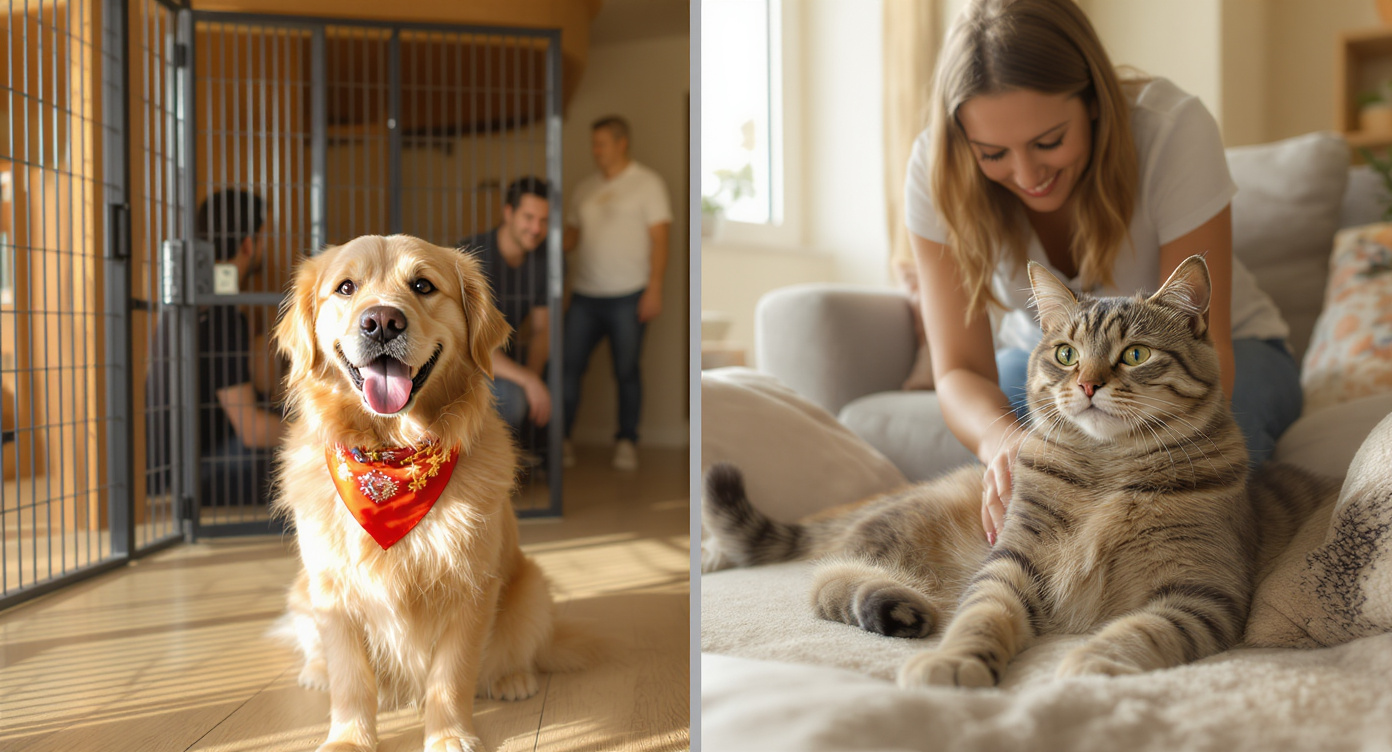
Pet boarding means dropping your pet off at a dedicated facility — a kennel, pet hotel, or doggy daycare — where trained staff care for multiple animals simultaneously. Boarding facilities range from basic kennels with individual runs to luxury “pet resorts” with private suites, swimming pools, and webcam access so owners can check in remotely.
Most boarding facilities in the US offer:
- Supervised group play sessions (dogs only, usually separated by size)
- Individual feeding, medication administration, and health monitoring
- 24/7 on-site supervision (at premium facilities)
- Grooming add-ons, training sessions, or enrichment activities
- Veterinary partnerships for emergencies
Boarding is well-suited for social dogs who love being around other animals and for owners who travel frequently. It’s also a strong choice when you need guaranteed, structured care with professional liability. Browse pet boarding options near you on HeiBob to compare local facilities.
What Is Pet Sitting?
Pet sitting means a professional sitter — either hired privately or through a platform like Rover, Wag, or a local agency — comes to your home to care for your pet in their familiar environment. In-home pet sitting can mean drop-in visits (30–60 minutes, 1–3x daily) or overnight stays where the sitter sleeps at your house.
Common pet sitting services include:
- Drop-in visits: feeding, playtime, potty breaks (usually 2–3 visits/day)
- Overnight in-home sitting: sitter stays the night at your home
- House-sitting combo: sitter cares for pet + handles basic house duties (mail, plants)
- Dog walking add-ons during sitting periods
- Pet sitting in the sitter’s own home (hybrid option — lower cost than facilities)
Pet sitting works exceptionally well for anxious pets, elderly animals, cats, and pets with medical conditions that need low-stress care. Find trusted local pet service providers on HeiBob to compare sitters and groomers in your city.
Cost Comparison: Pet Boarding vs. Pet Sitting in 2026
Cost is one of the biggest deciding factors. Here’s a current breakdown of average prices across major US cities as of June 2026:
| Service Type | Average Cost (per night/visit) | Budget Range | Premium Range |
|---|---|---|---|
| Standard Kennel Boarding | $30–$50/night | $25/night | $50/night |
| Luxury Pet Hotel/Resort | $60–$120/night | $55/night | $150+/night |
| In-Home Pet Sitting (drop-in) | $20–$35/visit | $15/visit | $45/visit |
| In-Home Overnight Sitting | $45–$75/night | $35/night | $100+/night |
| Sitter’s Home Boarding | $25–$45/night | $20/night | $60/night |
Sources: Rover.com national averages, Wag pricing data, and HeiBob provider listings (June 2026). Prices vary by city, pet size, and provider experience.
For a 7-night trip with one dog: Standard boarding = $210–$350 | Luxury boarding = $420–$840 | In-home sitting (3 visits/day) = $420–$735 | Overnight in-home = $315–$525.
Surprisingly, in-home pet sitting can cost more than basic boarding when you factor in multiple daily visits. However, the stress savings for anxious pets often justify the price difference. For cats specifically, drop-in visits (2x/day) at $20–$35/visit typically make pet sitting the more affordable option.

Pros and Cons of Pet Boarding vs. Pet Sitting
Pet Boarding: Pros
- Social stimulation — great for high-energy dogs who love other dogs
- 24/7 professional supervision at quality facilities
- Structured routine — feeding, exercise, and rest on a consistent schedule
- Emergency protocols — facilities typically have vet relationships and staff trained in pet first aid
- No strangers in your home — better for privacy-conscious owners
- Easier to book last-minute than finding a reputable individual sitter
Pet Boarding: Cons
- Kennel stress — unfamiliar smells, noises, and confinement can be very stressful for anxious or elderly pets
- Disease risk — canine influenza, kennel cough, and parasites can spread in group settings despite vaccination requirements
- Not ideal for cats — most cats are highly stressed by facility environments
- Disrupted routine — different feeding times, sleeping areas, and schedules
- Vaccination requirements — you must keep shots current (Bordetella, DHPP, Rabies)
Pet Sitting: Pros
- Home environment — pets stay in familiar surroundings with their own scents, toys, and routines
- Lower stress — dramatically reduces anxiety in cats, elderly pets, and anxious dogs
- One-on-one attention — sitter focuses entirely on your pet(s)
- Flexible scheduling — visits timed to your pet’s normal routine
- Ideal for medical needs — medications, special diets, and post-surgical care are easier at home
- Home security benefit — occupied-looking house deters burglars
Pet Sitting: Cons
- Trust factor — a stranger has access to your home; always verify references and use insured sitters
- Availability risk — individual sitters can cancel; agencies provide backup coverage
- Less supervision overall — drop-in visits leave pets alone for hours at a time
- Higher cost for dogs — multiple daily visits can exceed boarding costs for active dogs
- No socialization — not ideal for dogs who need daily interaction with other dogs
Which Option Is Right for Your Pet?
Use this quick decision guide to choose between pet boarding and in-home pet sitting:
| Your Situation | Best Choice |
|---|---|
| Social, energetic dog who loves other dogs | 🏢 Pet Boarding (group play) |
| Anxious, shy, or fearful dog | 🏠 In-Home Pet Sitting |
| Cat (any temperament) | 🏠 In-Home Pet Sitting |
| Pet with medical conditions or special diet | 🏠 In-Home Pet Sitting |
| Elderly or senior pet | 🏠 In-Home Pet Sitting |
| Multiple pets (dogs + cats together) | 🏠 In-Home Pet Sitting |
| Budget-conscious, short trip (1–3 nights) | 🏢 Standard Kennel Boarding |
| Long trip (7+ nights), social dog | 🏢 Luxury Boarding or Sitter’s Home Boarding |
| Puppy under 16 weeks (unvaccinated) | 🏠 In-Home Pet Sitting (avoids disease risk) |
| Owner wants home security while away | 🏠 Overnight In-Home Pet Sitting |
The bottom line: Pet boarding wins for social dogs when you want structured, professional care at a lower cost. Pet sitting wins for cats, anxious dogs, seniors, and multi-pet households where home comfort is the priority.
Tips for Choosing the Best Provider
Whether you go with boarding or sitting, these best practices will help you find a trustworthy provider:
- Visit before you book — tour the facility or meet the sitter at your home before committing
- Check reviews on multiple platforms — Google, Yelp, and platform reviews (Rover, Wag) together give a fuller picture
- Verify insurance and certifications — look for Pet Sitters International (PSI) or National Association of Professional Pet Sitters (NAPPS) membership
- Ask about emergency protocols — which vet do they contact? What’s their backup plan?
- Do a trial run — book a single night or a short visit before a long trip
- Update vaccinations first — most facilities require Bordetella, DHPP, and Rabies within the past year
- Leave detailed care instructions — feeding schedule, medications, behavioural triggers, favourite toys
Use HeiBob’s pet boarding directory or search local pet services to find vetted providers with verified reviews in your city.
📖 More Pet Care Guides
Best Dog Training in Austin, TX (2026): Top Trainers, Prices & What to Expect
Find top-rated dog trainers in Austin with prices, methods, and what to expect from your first session.
How Much Does Dog Grooming Cost in 2026? Complete Price Guide
Dog grooming costs by size, breed, and city — from basic baths to full grooms and specialty services.
Best Dog Boarding in Scottsdale, AZ (2026): Top Kennels & Cage-Free Resorts
Top dog boarding facilities in Scottsdale with prices, amenities, and what to look for before you book.
Frequently Asked Questions About Pet Boarding vs. Pet Sitting
Is pet boarding or pet sitting better for dogs?
Is pet boarding or pet sitting better for cats?
Which is cheaper — pet boarding or pet sitting?
Can I board a pet who has never been boarded before?
What vaccinations are required for pet boarding?
How do I find a trustworthy pet sitter?
Is in-home pet sitting safe? Who comes into my house?
Ready to find the perfect care option for your pet? Browse pet boarding facilities or local pet service providers on HeiBob to compare options, read verified reviews, and connect with trusted caregivers in your city.




Leave a Reply
You must be logged in to post a comment.